by Mayumi-H | Jul 4, 2012 | Persona 4 Fan Fiction, Short Stories

I had quite a bit of fun with last week’s picture prompt; my head certainly went in a new direction from where I’d been before!
But the 100-Word Challenge for Grown-Ups this week (week 48) is a phrase prompt:
… I blamed it on the dog…
Julia says: “Your pieces should be 106 words long (the prompt plus 100).” Without further ado, here’s what I’m offering, this week:
“Blame the Hound”
“That girl definitely knows what she’s doing, let me tell you…!”
“Who? Anna?”
“No. Juliet.”
“Juliet? I thought you were out with Anna, last night?”
“Canceled.”
“She canceled?”
“No, I canceled. Keep up, would you, mate?”
“Why’d you cancel?”
“Have you seen Juliet?”
“So, what? Anna’s history, then?”
“Why would you say that?”
“Because you went out with another girl last night, that’s why!”
“It’s not like I told her I was going out with another bird, moron.”
“So, then, what was your excuse for not taking her out last night?”
“I blamed it on the dog.”
“You don’t have a dog.”
“She doesn’t know that!”
Another dialogue-only piece; sorry about that. Again, I didn’t see the need for any description; I think the words speak for themselves.
Personally, I appreciate a man who is faithful, kindly, sweet…all that good stuff. Yet, it’s fun to imagine the life of a hound. (You know, just so long as it’s all in my imagination!)
![By kallerna (Own work) [Public domain], via Wikimedia Commons](https://mayumi.amorphous.press/wp-content/uploads/sites/4/2012/08/256px-pharaoh_hound1.jpg "256px-Pharaoh_Hound")
What did you blame on the dog, this week?
by Mayumi-H | Jul 2, 2012 | Excerpts, Fearless, Process
Here’s an example of a longish excerpt that I could probably remove…except I like too much what it says about the crew, and it gives a neat little point for Amber at the end:
Venus gave Emma a bounce in her lap and bent her chin to the girl’s shoulder. “Emma. Who’s the best surfer in the crew?”
Emma’s face split into a wide smile, and she clapped her hands on her thighs. “Neville!”
The crew laughed, save for Scott, who shot his daughter an incredulous look.
“Wha-?” he said. “What do you mean, Neville?”
“See?” Neville told Scott with a wag of his finger. “That is why I am your captain. Even a four-year-old recognises my superiority.”
Venus snickered, then leaned in to Emma again. “And who is the sweetest?” she asked, glancing at the expectant faces around her.
“Danny,” Emma answered with a smile, and here the crew gave a collective teasing croon, while Danny blushed beneath this praise.
Venus twitched her nose and gave Emma another bounce. “And who is the cutest?” she asked in a mock-whisper.
Emma squeaked, burying her face against Venus’s arm. She mumbled something into her mother’s sleeve, which prompted a repeat asking.
“You can say it,” Venus told her, poking her in the belly.
Emma raised her head, her round cheeks redder than even Danny’s had been, and said, “Finchy!”
The crew turned their hooting to Ross, who thanked Emma with a pat on her head.
“I call foul,” Scott said, sounding miffed, while the other guys continued to laugh.
Amid this jaunty mockery, Amber rubbed her hand over Ross’s arm. But then she leaned out and looked at Emma, and asked, “But, whom do you love the most?”
Around her, the rest of them fell hushed. Save for Emma, who didn’t pause to think, but instead said, quite readily, “Daddy!”
“Oh, that’s my girl,” Scott said with a coo, and he pulled Emma from Venus’s lap into his own, which the little girl accepted gladly.
Amber – like a lot of my protagonists – has father issues. Which is weird, to me, since I have always enjoyed a good relationship with my own father. With my mother, too. I grew up a pretty happy kid, even if we never “had” a lot. I always felt my parents were people I could trust.
But I also crave their approval. And perhaps that’s from where these character issues come.
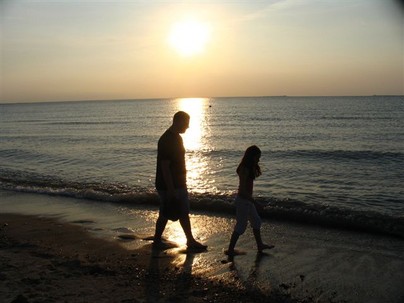
Daddies and daughters. They’re always the same, deep down.
In one early episode of the science fiction comedy series “Red Dwarf,” the character of Rimmer receives word that his father has died. Another character, Lister, asks him if he loved his father. Rimmer replies that he despised his father…but he still desired his father’s approval. Maybe that’s what plagues my characters. No matter what difficulties they have with their families and loved ones, they still seek that praise we all want, as children.
Amber may say she hates her father…but I think that line’s important for her to voice.
How do you write family in your stories?
by Mayumi-H | Jun 30, 2012 | Fearless, Process
Perhaps that title is a bit misleading….
I recently started preliminary planning for a documentary project, and, as I did, I got to thinking about why I like to do what I like to do when it comes to video production. I’ve spent a good portion of my professional (job) life working with video, and much of that has to do with production. But, while I once fancied myself an actor, I’ve come to enjoy being behind the scenes more than being in front of a camera. Video production involves many steps, and many skills, but the one which I favor most doesn’t happen in production, at all. It happens in post-production: editing.
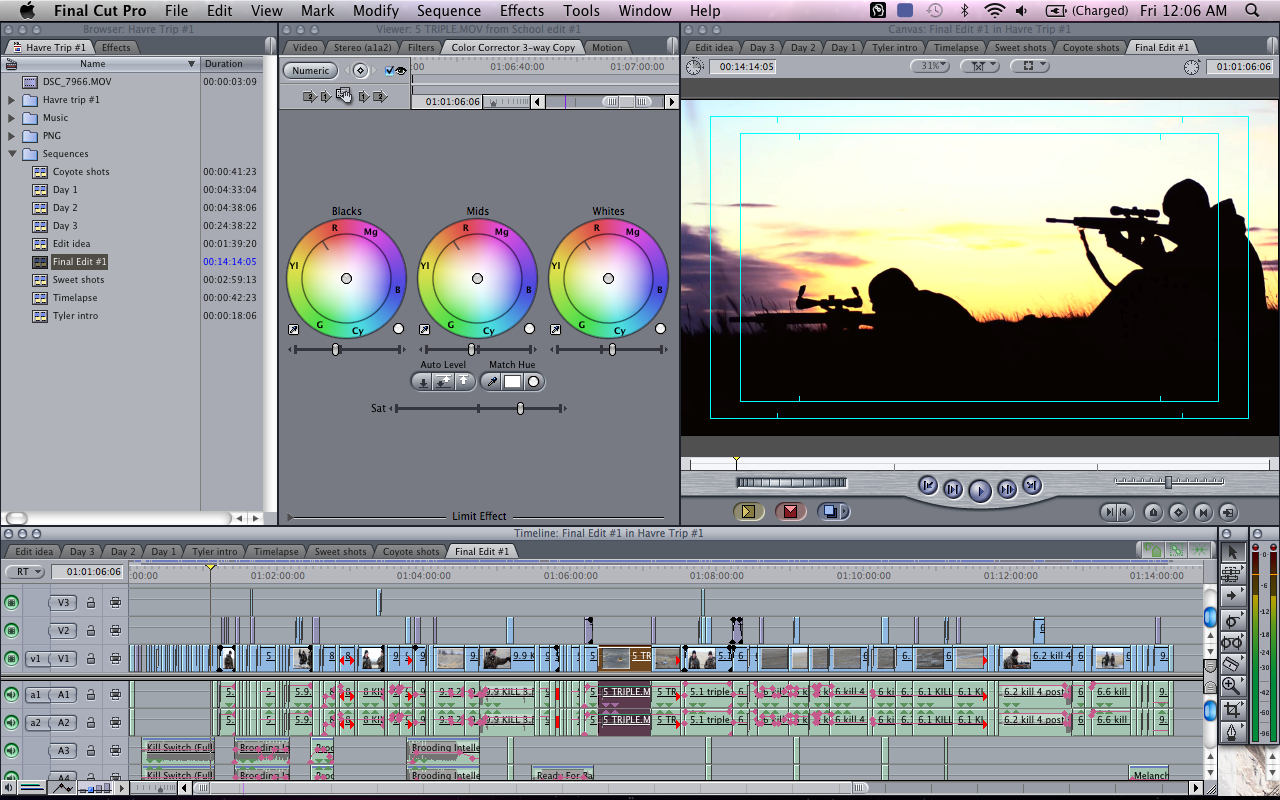
This is kind of my life.
I’ve edited lots of projects in my time: some small, some not. What I think I love most about that process, though, is that I get to be the one telling the story.
If you think about it, the editor has final input into how the story – especially one in video – plays out. We control the angles, the cuts, the music – all of the details, conscious and subliminal. And that controls how the audience views the characters, the conflict, and the outcome. A simple focus frame on a character’s face (whether they’re speaking or not) can give completely different meaning to a scene. That guy doing the intro for “The Outer Limits” was not kidding; we (editors, that is) control everything.
[youtube http://www.youtube.com/watch?v=8CtjhWhw2I8?rel=0&w=420&h=315]
It’s the same in writing, too, I think. The editor – whether that’s you doing your first edit or your professional editor doing the final one – controls what the reader sees, how they view the story. The editor doesn’t actively write any of the words of the story, though. Not in my experience, anyway. They help tell the story without writing the words, guiding the writer’s hand and vision with cuts, suggestions, and insight.
We video editors do the same thing. We’re given rough footage, where plot, point, characterization can go one of any number of ways. And, when we’re finished, assuming we’ve done our job right and well, the audience gets a story. Hopefully a good one. But marked by our hands, no matter that.
I’m excited to work with an editor for my first real novel. I’m scared, too; I’ve never put such a huge work – such a gigantic chunk of myself – out there for someone else to tear down. But I want to build a better story than I could do alone. I just hope I get an editor who’s as careful and conscientious as I try to be.
Have you worked with a professional editor before? Was it a good fit, or a not-so-good one? What did you learn from that process?
by Mayumi-H | Jun 25, 2012 | Excerpts, Fearless, Process
Sometimes, we write little moments and interactions that we love…but they serve no extra purpose to the overall story. For me, this represents one of those moments:
Ross snorted and laughed in the same breath, at once recalling that afternoon on the beach when he’d been just shy of twenty-one, freshly returned from Torpoint and eager to be a civilian again, free to ride the waves, with Neville sitting beside him in the sand. And how Neville had started to have The Talk with him, only to be interrupted by Ross’s pointed and unconcerned recognition of the reason behind his friend’s mumbling and hawing:
“Are you trying to tell me that you’re gay?” Ross had asked, with some impatience.
Neville had stared at him for a long pause of time, his expression unreadable. Then he’d murmured, quite quietly: “…Yeah.”
Ross had considered that for a moment, then asked: “Do you fancy me?”
“Wh-?” Neville had sputtered, as he’d given a quick shake of his head. “God, no! You’re a breeder…!”
“Well, then, no worries, mate,” Ross had told him then, hitting him in the shoulder with the back of his hand before forcing himself to his feet. “Now, come on; I want to catch some waves before supper.”
And that had been the end of the discussion, so far as Ross had been concerned. Neville was simply Neville; and if his friend being gay meant that Ross didn’t have to compete with him (handsome, stylish, good-guy Neville) for the attentions of any pretty girls in the village, all the better.
So the very thought that their friendship could be about anything more than the mutual platonic interests in their surfing or the shop made Ross laugh again.
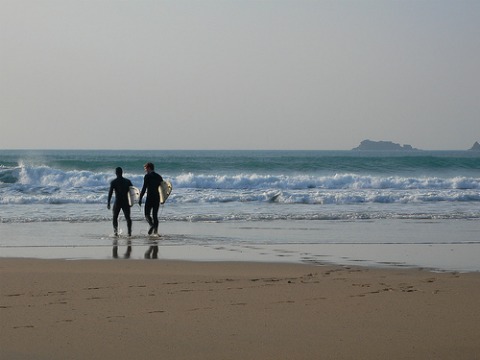
I really like the flashback exchange that happens between Ross and Neville, but it’s unnecessary explanation. By the time this flashback occurs, the reader should already know that Ross and Neville are good friends, and each one’s sexual preference has no bearing on that friendship.
Readers are free to read into text what they want, of course, and Ross’s perspective might even be different from Neville’s. But to take valuable reader time to make that explanation seemed like a lot of extra words, no matter how much I enjoyed the flow of them.
Have you ever edited out a scene or conversation that you really liked? Did you agree with that decision? Or, did you regret it?
by Mayumi-H | Jun 20, 2012 | Short Stories, Songbirds
Welcome to another submission for the 100-Word Challenge for Grown-Ups (week 46)!
I didn’t submit to last week’s article prompt (though I did use it as inspiration for another vignette), but this week, we’re back to my bread and butter of flash fiction writing. Prompt as follows, per Julia:
… in the dark recess of my mind …
As usual you have 100 words to add to these 7 making 107 altogether. Make sure you keep the prompt as it is….
Here’s my take:
“A Wild Ride”
“…Are you scared?”
“No. Now, stop talking. You’re shaking the plane.”
“Would you relax? Nothing’s going to happen. We’re perfectly safe.”
“Look, logically, historically, empirically, I know that. But, in the dark recess of my mind, I can’t help but think this is impossible! Man simply was not meant to scream through the air in a giant sardine tin!”
“The only one screaming, here, is you.”
“Your compassion is overwhelming.”
“Listen. Whenever you feel nervous, just squeeze my hand. Just like that. There. Better?”
“…Yeah. Thanks.”
“I love you, you know.”
“I love you, too.”
“Oh, I can’t wait for you to meet my parents- ow!”

I’ve been up and down on planes so many times in the last week-and-a-half, I couldn’t pass up the opportunity to take that somewhat cryptic, almost foreboding prompt of words and make it into something light-hearted…and close to my own experiences.
I don’t usually do straight dialogue-only pieces, but I don’t think any description is really needed, here. Plus, my Songbirds stories are built around simplicity.
How did you interpret the prompt? Did you go dark, or light?
by Mayumi-H | Jun 18, 2012 | Fearless, Process
One of the themes with which I like to play in my stories is juxtaposition.
Trait (or character) juxtaposition can manifest in different ways. In the last big story I wrote (1 More Chance!), the heroine is a small-town girl who falls for a big-city boy. Nothing new, there…except she was the fighter (and the dominant) in this relationship, while her boyfriend filled the role of gentle artist (and submissive, for the most part). During the course of the story, though, they ended up changing roles depending on the situations that arose, and they learned you don’t have to be just one type of person or another. They grew together to trade off responsibilities and character traits, where warranted.
I prefer these relationships.
One of the aspects of “typical” romances that really bugs me is how women (seemingly) have to be powerful in business, money, skills, whatever, and then the man (usually) breaks them down into a damsel, for sake of the typical role fulfilment. When I wrote 1 More Chance!, I was dealing with pre-conceived characters, so I was thankfully able to ignore that. With Fearless, the situation is different.
I wanted Amber to be a strong woman. But I didn’t want to make her powerful. Part of what Ross (the main character and point of view) finds so alluring about her is that she’s audacious, worldly, and intrepid…but she’s still very much a girl. She likes clothes and shoes and wants to be pretty. She also wants to prove herself (and that gets her into trouble). But she isn’t someone who threatens or emasculates him, which is what I see many supposedly “strong” women characters do to men.
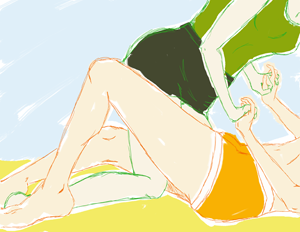
Woman on top
http://bonusparts.deviantart.com/
I’m perhaps playing into a more masculine mentality with this story, and that will likely alienate romance readers. But Amber as she is feels so true to me. I don’t want to make her a genius or a tough fighter or something else that feminism might demand me to do with her, to make her more modern.
And I really enjoy writing the role reversals that come with the conflict of the story. Not only does it show what Amber’s capable of…but it lets Ross grow, too.
I’m interested to see what my beta readers think of Ross and Amber (and the rest of the crew) when they get to reading it. Not that I think I’ll be willing to change who they are. Because I’m just stubborn like that.
What are your feelings on “strong” women?

![By kallerna (Own work) [Public domain], via Wikimedia Commons](http://mayumi.amorphous.press/wp-content/uploads/sites/4/2012/08/256px-pharaoh_hound1.jpg "256px-Pharaoh_Hound")


Recent Comments