by Mayumi-H | Aug 13, 2012 | Excerpts, Fearless, Persona 4 Fan Fiction, Process
As much as I enjoy delving into the heady depths of a good romance, one of my favorite parts of examining relationships is the dance of early affection between two characters. While not necessarily innocent (especially from a player’s point of view), it’s often full of a plain and refreshing simplicity:
![By A. Barra (Own work) [GFDL (http://www.gnu.org/copyleft/fdl.html) or CC-BY-SA-3.0-2.5-2.0-1.0 (http://creativecommons.org/licenses/by-sa/3.0)], via Wikimedia Commons](https://mayumi.amorphous.press/wp-content/uploads/sites/4/2012/08/320px-iris_dancers_veil.jpg?w=300 "320px-Iris_'Dancer's_Veil'")
They simply walked and talked: about the streets and shops, at first, but – as the steps wore on – about less random and more personal things. Such as the kinds of music they liked (she enjoyed an eclectic mix of dance hall, pop, and classical, while he favoured straight-up guitar rock, funk, and electronica), to what sorts of television programmes they preferred (she swooned over period masterpieces with the same affection he held for episodic science fiction, though they were both fans of detective dramas of any sort), to what foods they liked to eat (he was a lenient vegetarian, whereas she adored rare steak…but both of them found tandoori takeaway too scrumptious to ever pass up).
All along the way, Ross found himself becoming more and more curious about discovering what made pretty, perky, adorably sexy Amber Baelin tick, that he almost forgot how easily she could set his nerves on fire. Until they approached the heavy wooden door of the narrow two-storey row house she called home, that is, because it meant their time together was over.
I’ve occasionally spent a good deal of time with two would-be or could-be lovers breaking through the initial barriers of mutual ignorance. But, for this story, I felt the time would be better spent on the more pressing conflicts of self-doubt, past heartaches, and unexpected physical limitations. Still, it’s always fun to imagine how two characters can come together.
Someone might say that this is too much outright “telling” for a story. As for me, I like to think these smaller details are just icing on a bigger cake I’m trying to “show.”
How do you approach the blossoming of love in your stories? Or, do you think it’s just a bunch of rubbish, and bring on the bodycount?
by Mayumi-H | Jul 30, 2012 | Excerpts, Fearless, Process
A friend of mine asked to read my latest project, which happens to be Fearless. I don’t usually share my work with people I trust so early in the game, but I offered him the first two (draft) chapters, mostly just to shut him up.
It didn’t.
What I got back was an earful. He made some good points, but this had to be my favorite critique: The best friend is more likable than the hero. To quote: “Your hero’s a jerk.”
That one actually made me grin. Because yes, he is. But, that’s a big part of the story.
One of the things I love about my main characters is that they’re flawed. Some more than others, of course, but I try to help them all grow. That’s the beautiful thing about heroes and heroines. They’re like you and me (sometimes scarily so), but, over the course of the story, they push themselves to be better people. They don’t always get what they want, but they’re stronger men and women for the effort.
Which is why it’s so much fun to write them as jerks in the beginning:
Ross felt a grin creep to his face. Then he raised his free arm and called out, “Mornin’, Beth!”
Neville clicked his tongue, muttering, “Grow up.”
Ross ignored him, swinging his board up as he approached both fruit and filly. He bent his head, offering the Crispins’ youngest daughter a leering smile. “You look as scrumptious as those apples!” he told her.
Beth laughed and blushed bright red under her kerchief. “Thank you,” she said, her voice mostly squeal.
It took some effort for Ross to keep his smile in place; hopefully, that voice would one day mature as nicely as her tits had already done. Still, he wasn’t interested in her, just the apples, so he offered her a charming flare of his nostrils and asked, “Think you could let us have a taste?”
What do you like best about your main character(s)? Are they the ones who grow over the story, or do they spur the growth in others?
by Mayumi-H | Jul 16, 2012 | Excerpts, Fearless, Process
In photography and cinematography, forced perspective is a technique that uses optical illusion to make an object look closer/larger or farther away/smaller than it actually is.
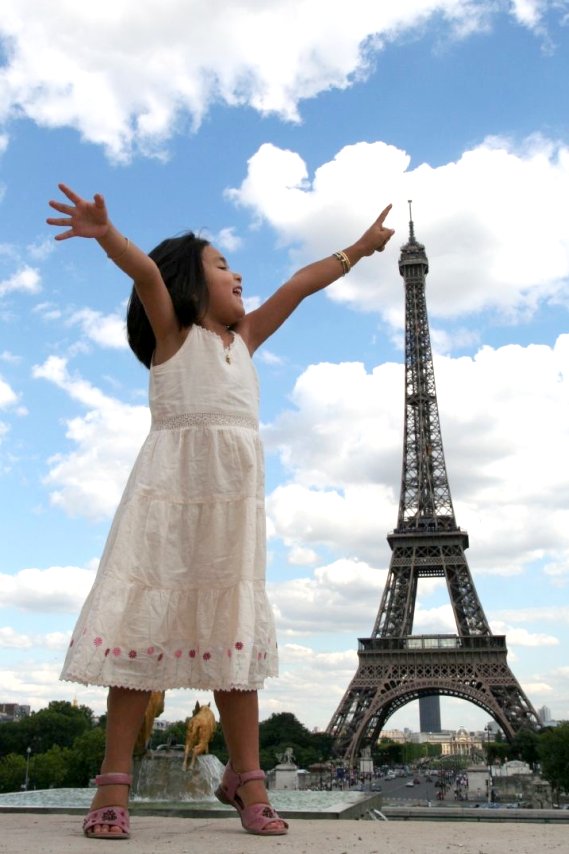
But this post is not about that sort of forced perspective.
I like to tell stories from a particular character’s viewpoint. I enjoy sticking with that one character through the chapter (or story), and relating his or her feelings to the reader through events, dialogue, and description. But everything that is seen, heard, or experienced in the story is how it relates to that particular character. An over-the-shoulder perspective, if you will.
I hate narratives that jump around from perspective to perspective – especially within a single chapter! – because it tends to leave me feeling like just an observer, and less invested in what’s happening to those characters. Some writers can get away with this multiple-perspective technique. It’s hard for me, though.
Get invested with your characters. Keep them close.
I like learning about a character through their triumphs and tragedies. Even though I know where that character will end up (usually), I love learning about him or her through telling their story. Perhaps it’s a crutch to fall into the same storytelling style for most of my work, but it’s also what I enjoy.
Here’s an example of what I mean:
She wasn’t the cool, salty sea that had filled his waking and dreaming senses from the moment of his birth, that much was true. She couldn’t slip frictionless through his fingers, or buoy him through careless mistakes that sent him tumbling from his board, or let him glide across her blue depths, like a bird skimming the tips of its wings through the froth.
But then, the sea didn’t warm him on chilled nights. It didn’t smell like jasmine or strawberries or mint, depending on its mood. It didn’t change its taste, either, from cool and creamy, to hot and bitter, and anything in between. And it couldn’t fill his arms, so soft and supple and warm, or cuddle him close in return. Amber was the only one who could do that.
Amber was the only one he wanted to do that.
I don’t think I could tell the same story I want to tell using a different narrative technique. Readers might want to know what’s going on in another character’s head, but I like keeping a bit of mystery. I go through my own life not knowing what other people think. Why not write stories the same way?
What’s your preferred storytelling perspective? Why?
by Mayumi-H | Jul 9, 2012 | Excerpts, Fearless, From Hell (A Love Story), Persona 4 Fan Fiction, Process
Warning: I’ve tried to keep it clean, but discussion of mature themes to follow.
“It’s been a while, hasn’t it?” Venus guessed. “Since you two have…been together?”
Ross paused, hand hovering over the electric kettle. “A bit,” he admitted.
She offered him a slow nod, glancing down at the edge of the counter space, where there was a stash of pens and a flip-pad scribbled with future meal notes. “Well, sex shouldn’t be the most important thing in a relationship.”
He shook his head as he filled the kettle with water. “I know that-”
“But it is important,” she said, and here Ross raised his head in quiet surprise.
I’ve never shied away from sexual situations in my stories. I don’t consider a sex scene in and of itself pornographic, though it can certainly be used for that purpose. In most of my stories (as in life), sex is a way for two people to communicate beyond the use of words; the intense intimacy forged by being sexual with another person creates all sorts of interesting conflicts and realizations.
Venus, here, is stating my own opinion: Sex should not be the most important aspect of a relationship. But it is important.

Sexual compatibility can mean different things for different people. A couple with low libidos may have sex once a month…and it will be wonderful every single time. A couple with strong libidos may have sex once a day…and that can be beautiful every single time, too. Relationships are as unique as the people in them, and it’s the part of stories I really enjoy examining.
I like a sex scene to mean something, though. A conflict of interests. A learning experience. A personal enlightenment. Even a casual or detached sex scene can have important meaning for a character, at that moment in the story. I like using all of these approaches to sex in my stories.
What I’ve been enjoying with this latest endeavor, though, is the fade-to-black, or glossing, technique. Sex for its own sake doesn’t do anything for a story; I’ve always agreed with that. But sex also doesn’t have to happen “on-screen” for it to be worthwhile to a character’s or relationship’s development.
For Fearless, let’s say there are four sex scenes that are important for the development of the plot. Does that mean the characters have sex only four times in the story? Hell, no! But, I can show in a paragraph – or a sentence – what’s happening between them, without going into detail. I know what’s going on; the reader knows what’s going on. And I can get to the really important part – the ramifications or repercussions of that sex scene – that much more quickly, than if I delved into the detail.
Some writers and readers don’t like sex in their stories. That’s fine. I do like sex, though, when it means something. Just like in real life.
How do you feel about sex in stories?
by Mayumi-H | Jul 2, 2012 | Excerpts, Fearless, Process
Here’s an example of a longish excerpt that I could probably remove…except I like too much what it says about the crew, and it gives a neat little point for Amber at the end:
Venus gave Emma a bounce in her lap and bent her chin to the girl’s shoulder. “Emma. Who’s the best surfer in the crew?”
Emma’s face split into a wide smile, and she clapped her hands on her thighs. “Neville!”
The crew laughed, save for Scott, who shot his daughter an incredulous look.
“Wha-?” he said. “What do you mean, Neville?”
“See?” Neville told Scott with a wag of his finger. “That is why I am your captain. Even a four-year-old recognises my superiority.”
Venus snickered, then leaned in to Emma again. “And who is the sweetest?” she asked, glancing at the expectant faces around her.
“Danny,” Emma answered with a smile, and here the crew gave a collective teasing croon, while Danny blushed beneath this praise.
Venus twitched her nose and gave Emma another bounce. “And who is the cutest?” she asked in a mock-whisper.
Emma squeaked, burying her face against Venus’s arm. She mumbled something into her mother’s sleeve, which prompted a repeat asking.
“You can say it,” Venus told her, poking her in the belly.
Emma raised her head, her round cheeks redder than even Danny’s had been, and said, “Finchy!”
The crew turned their hooting to Ross, who thanked Emma with a pat on her head.
“I call foul,” Scott said, sounding miffed, while the other guys continued to laugh.
Amid this jaunty mockery, Amber rubbed her hand over Ross’s arm. But then she leaned out and looked at Emma, and asked, “But, whom do you love the most?”
Around her, the rest of them fell hushed. Save for Emma, who didn’t pause to think, but instead said, quite readily, “Daddy!”
“Oh, that’s my girl,” Scott said with a coo, and he pulled Emma from Venus’s lap into his own, which the little girl accepted gladly.
Amber – like a lot of my protagonists – has father issues. Which is weird, to me, since I have always enjoyed a good relationship with my own father. With my mother, too. I grew up a pretty happy kid, even if we never “had” a lot. I always felt my parents were people I could trust.
But I also crave their approval. And perhaps that’s from where these character issues come.
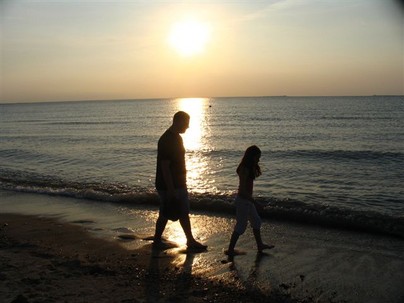
Daddies and daughters. They’re always the same, deep down.
In one early episode of the science fiction comedy series “Red Dwarf,” the character of Rimmer receives word that his father has died. Another character, Lister, asks him if he loved his father. Rimmer replies that he despised his father…but he still desired his father’s approval. Maybe that’s what plagues my characters. No matter what difficulties they have with their families and loved ones, they still seek that praise we all want, as children.
Amber may say she hates her father…but I think that line’s important for her to voice.
How do you write family in your stories?
by Mayumi-H | Jun 30, 2012 | Fearless, Process
Perhaps that title is a bit misleading….
I recently started preliminary planning for a documentary project, and, as I did, I got to thinking about why I like to do what I like to do when it comes to video production. I’ve spent a good portion of my professional (job) life working with video, and much of that has to do with production. But, while I once fancied myself an actor, I’ve come to enjoy being behind the scenes more than being in front of a camera. Video production involves many steps, and many skills, but the one which I favor most doesn’t happen in production, at all. It happens in post-production: editing.
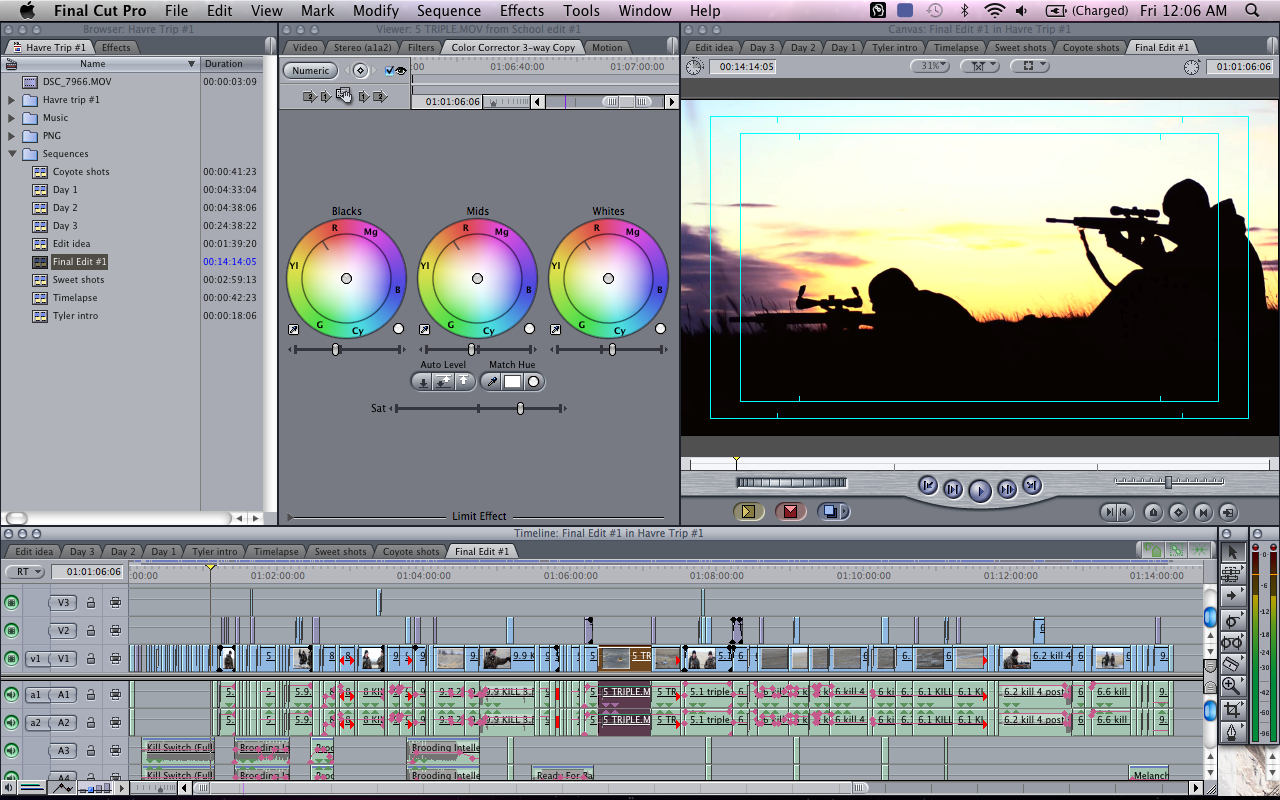
This is kind of my life.
I’ve edited lots of projects in my time: some small, some not. What I think I love most about that process, though, is that I get to be the one telling the story.
If you think about it, the editor has final input into how the story – especially one in video – plays out. We control the angles, the cuts, the music – all of the details, conscious and subliminal. And that controls how the audience views the characters, the conflict, and the outcome. A simple focus frame on a character’s face (whether they’re speaking or not) can give completely different meaning to a scene. That guy doing the intro for “The Outer Limits” was not kidding; we (editors, that is) control everything.
[youtube http://www.youtube.com/watch?v=8CtjhWhw2I8?rel=0&w=420&h=315]
It’s the same in writing, too, I think. The editor – whether that’s you doing your first edit or your professional editor doing the final one – controls what the reader sees, how they view the story. The editor doesn’t actively write any of the words of the story, though. Not in my experience, anyway. They help tell the story without writing the words, guiding the writer’s hand and vision with cuts, suggestions, and insight.
We video editors do the same thing. We’re given rough footage, where plot, point, characterization can go one of any number of ways. And, when we’re finished, assuming we’ve done our job right and well, the audience gets a story. Hopefully a good one. But marked by our hands, no matter that.
I’m excited to work with an editor for my first real novel. I’m scared, too; I’ve never put such a huge work – such a gigantic chunk of myself – out there for someone else to tear down. But I want to build a better story than I could do alone. I just hope I get an editor who’s as careful and conscientious as I try to be.
Have you worked with a professional editor before? Was it a good fit, or a not-so-good one? What did you learn from that process?

![By A. Barra (Own work) [GFDL (http://www.gnu.org/copyleft/fdl.html) or CC-BY-SA-3.0-2.5-2.0-1.0 (http://creativecommons.org/licenses/by-sa/3.0)], via Wikimedia Commons](http://commons.wikimedia.org/wiki/File:Iris_%27Dancer%27s_Veil%27.JPG "320px-Iris_'Dancer's_Veil'")

![Brocken Inaglory [CC-BY-SA-3.0 (http://creativecommons.org/licenses/by-sa/3.0) or GFDL (http://www.gnu.org/copyleft/fdl.html)], via Wikimedia Commons](http://commons.wikimedia.org/wiki/File%3AFalling_surfer.jpg)


Recent Comments