by Mayumi-H | Sep 8, 2012 | Process
Many of us have already been told it’s better to keep our prose as simple as possible: clear is better than clever, as they say. For the most part, I agree. And I’ve enjoyed my share of flowery prose! One part of a story that’s created something of a dividing line between me and other authors, though, is just that: the dividing line. To put it more broadly, the use of transitions.
Keeping in mind that adage of clearer being better than clever, I don’t see much point in dwelling on long, rambling transition sequences. But, I also think the dividing line is a bit of a cheat. Not only does that divider line (or space block, or asterisks, or whatever) take the reader out of the moment, it breaks the flow of the narrative. Sometimes, this doesn’t matter so much; if you’re changing perspective, for example, you want to separate the narrative flow somehow. But for a subtle scene or time change, I prefer to keep reading, rather than having my eye stutter over a visual division.
The rest of the afternoon passed quickly: the relatively uneventful walk back to the city centre, with St. Stephens and the train station, and a bit of aimless traipsing around the shops while the hotel prepared their late check-in room. Sally led them into a book shop where they stopped to listen to a charming children’s reading circle; Larry dallied in a retro art store with a selection of colorful and odd-looking international movie posters.
The quaintness was charming, of course, and they chatted along the way about both realistic potentialities and dreamy might-bes. But, through it all, there was still something missing, something hovering almost expectantly in the air between them: when they’d stop at a corner, or pause in conversation, or share a quiet look over tea and biscuits in a coffee shop.
Now, the above doesn’t really move the plot along any; all it does is take the reader from one scene to another. An editor might tell me to cut it. Simply removing these paragraphs between the two scenes makes my brain stutter, though, the same as putting in one of those divider lines would do. So, I’ve indulged myself with this transition.
What are your feelings on transitions in prose?
by Mayumi-H | Aug 20, 2012 | Fearless, From Hell (A Love Story)
The other day, I couldn’t get a scene to work. This happens on a lot of days, actually, but this particular one was just grinding away at me. It was so frustrating, I wanted to just throw my laptop across the room and give up, say, To Hell with it, and let the story wither in my archives, like so many others.
Then, I received this message:
…[H]ow you describe the struggles of the main characters dealing with overcoming there [sic] personal issues and the physical issues of someone who has been confined to a wheel chair…is spot on. I really appreciate and admire how you got the pain and issues that are both physical and mental correctly for both characters.
After reading that, I felt awesome.
It’s easy for me to write facts. It’s also easy, sometimes, for me to write dialogue. And characters, and plot. But emotion made true – that’s where I pour a lot of my energies. It’s what I enjoy about stories (the conflicts of personalities), and it’s one part of my writing I try to do well. For that, I dig deep, into my own experiences, doubts, thoughts, heartaches.
So, when a reader – even a beta – comes back to me and says, Damn, girl, you got that right, it makes me think maybe I can do this, maybe this story is worth sharing beyond digital clippings and drafts passed to pals. And I sat back down and cleared my head…and the scene worked.
There’s still a long road ahead of me (revisions, edits, queries), but I’ll always keep that feedback pinned close to my desk, for the next time someone makes me feel like my writing is shit.
“Spot on.” Hell, yeah!
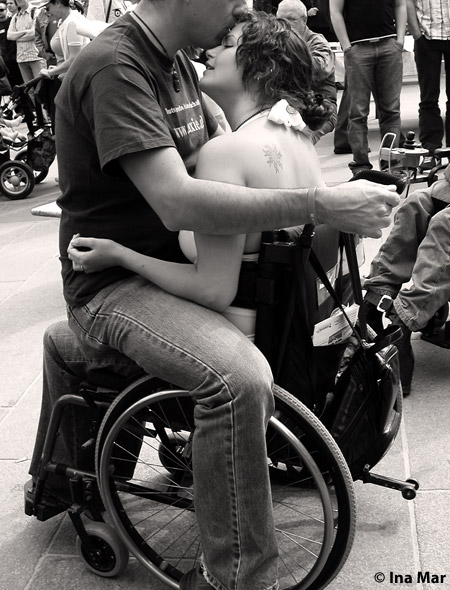
What keeps you writing your story?
by Mayumi-H | Aug 13, 2012 | Excerpts, Fearless, Persona 4 Fan Fiction, Process
As much as I enjoy delving into the heady depths of a good romance, one of my favorite parts of examining relationships is the dance of early affection between two characters. While not necessarily innocent (especially from a player’s point of view), it’s often full of a plain and refreshing simplicity:
![By A. Barra (Own work) [GFDL (http://www.gnu.org/copyleft/fdl.html) or CC-BY-SA-3.0-2.5-2.0-1.0 (http://creativecommons.org/licenses/by-sa/3.0)], via Wikimedia Commons](https://mayumi.amorphous.press/wp-content/uploads/sites/4/2012/08/320px-iris_dancers_veil.jpg?w=300 "320px-Iris_'Dancer's_Veil'")
They simply walked and talked: about the streets and shops, at first, but – as the steps wore on – about less random and more personal things. Such as the kinds of music they liked (she enjoyed an eclectic mix of dance hall, pop, and classical, while he favoured straight-up guitar rock, funk, and electronica), to what sorts of television programmes they preferred (she swooned over period masterpieces with the same affection he held for episodic science fiction, though they were both fans of detective dramas of any sort), to what foods they liked to eat (he was a lenient vegetarian, whereas she adored rare steak…but both of them found tandoori takeaway too scrumptious to ever pass up).
All along the way, Ross found himself becoming more and more curious about discovering what made pretty, perky, adorably sexy Amber Baelin tick, that he almost forgot how easily she could set his nerves on fire. Until they approached the heavy wooden door of the narrow two-storey row house she called home, that is, because it meant their time together was over.
I’ve occasionally spent a good deal of time with two would-be or could-be lovers breaking through the initial barriers of mutual ignorance. But, for this story, I felt the time would be better spent on the more pressing conflicts of self-doubt, past heartaches, and unexpected physical limitations. Still, it’s always fun to imagine how two characters can come together.
Someone might say that this is too much outright “telling” for a story. As for me, I like to think these smaller details are just icing on a bigger cake I’m trying to “show.”
How do you approach the blossoming of love in your stories? Or, do you think it’s just a bunch of rubbish, and bring on the bodycount?
by Mayumi-H | Aug 11, 2012 | Persona 4 Fan Fiction, Process
I follow a lot of people on Twitter. Most of them, I follow for fun: they’re insightful, amusing, friendly folk. But some are on my “understanding the business of writing” list: agents, editors, writers, publishers. Some of these people offer the same insightful, amusing, friendly 140-character glimpses into their daily lives that the others do. But, lately, I’ve seen a trend of negativity in this latter crowd that makes me wonder if I’m right for this want-to-be-published storytelling game.
One person offered up a tweet that was basically, “Don’t send me your manuscript if…” Another said, “Don’t expect me to read your book if…” A third mentioned, “Don’t even think of querying me if…”
Many of these “don’ts” are valid, valuable points to know and understand…but I’ve gotten a bit fed up with seeing so many “don’ts” all over the place. As someone who’s chosen an art (storytelling) for a personal outlet, I’ve had to deal with a lot of naysaying and doubts already, and it does very little for one’s sense of self-worth to be told “Don’t” all the time.
So, I’ve decided to share in this space my list of “dos.” Hopefully, at least one of these will help you get through your slower days.
- Do be engaged with your own story. Love it, to help it grow beyond those scratchings of loose plot outlines and vague character sketches.
- Do respect your readers’ intelligence. The good ones want and deserve a story worth the time of picking up and reading.
- Do finish your story, even if that first ending isn’t all you’d hoped and dreamed. Qualification and strength of your story will come from revision, but you can only get to the point of revision if you manage to finish the story first.
- Do try your best. You will be more proud and pleased with your story if you know you’ve given it your all. Other people will see it, too!
- Do listen to critique. You won’t be able to please everyone, of course, but any well-thought critique is worth considering.
- Do remember that this is your story. Write it for you, first. If your goal is publishing and making millions, you may have to revise parts (or all) of it…but it should always remain your story at its core.
And, most importantly:
![By Thomas Tolkien (Flickr: Surfer girl (2 of 2)) [CC-BY-2.0 (http://creativecommons.org/licenses/by/2.0)], via Wikimedia Commons](https://mayumi.amorphous.press/wp-content/uploads/sites/4/2012/08/256px-surfer_girl_2_of_2.jpg "Surfer_girl_(2_of_2)")
I had to link to this in honor of my surf mentor, Fiona. 🙂
Photo by Tom Tolkien.
by Mayumi-H | Aug 4, 2012 | Process
While listening to the radio the other day, “Radar Love” by Golden Earring came on. Now, this is admittedly a very fun driving song, but it’s not driving soundtracks I’m discussing in this post.
[youtube http://www.youtube.com/watch?v=Hw9CzSSk218?rel=0&w=420&h=315]
One of the oft-repeated lines in the song is “We’ve got a thing that’s called radar love.” What are the hidden messages in that lyric? It’s not important. What’s important is that Golden Earring has chosen to describe love as a “thing.”
Thing?
The term “thing” is, by definition, an object unable to be described (at least with ease). In a fun driving song, the meaning probably doesn’t matter. But, in a story – short story, novel, poem – a writer should be able to avoid using the word “thing” as a description.
Admittedly, I can go overboard with my descriptions (succinctness is something I need to work on). But, if you can’t describe an object – if, say, it’s wholly foreign or unfamiliar to the narrator – then at least liken it to a similar object, to give the reader an idea of what they’re supposed to be seeing or experiencing. Saying “thing” doesn’t even give your poor reader a clue!
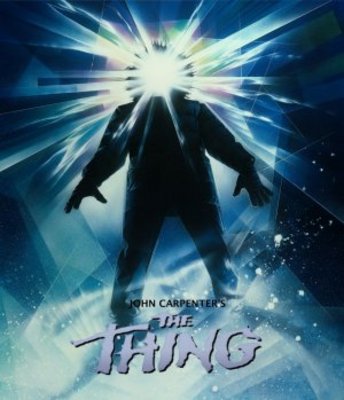
…Unless, of course, you’re talking about The Thing. Because that Thing…no words can describe.
So, what about you? What are your description pet peeves?

![By A. Barra (Own work) [GFDL (http://www.gnu.org/copyleft/fdl.html) or CC-BY-SA-3.0-2.5-2.0-1.0 (http://creativecommons.org/licenses/by-sa/3.0)], via Wikimedia Commons](http://commons.wikimedia.org/wiki/File:Iris_%27Dancer%27s_Veil%27.JPG "320px-Iris_'Dancer's_Veil'")

![By Thomas Tolkien (Flickr: Surfer girl (2 of 2)) [CC-BY-2.0 (http://creativecommons.org/licenses/by/2.0)], via Wikimedia Commons](http://mayumi.amorphous.press/wp-content/uploads/sites/4/2012/08/256px-surfer_girl_2_of_2.jpg "Surfer_girl_(2_of_2)")

Recent Comments