by Mayumi-H | Aug 20, 2012 | Fearless, From Hell (A Love Story)
The other day, I couldn’t get a scene to work. This happens on a lot of days, actually, but this particular one was just grinding away at me. It was so frustrating, I wanted to just throw my laptop across the room and give up, say, To Hell with it, and let the story wither in my archives, like so many others.
Then, I received this message:
…[H]ow you describe the struggles of the main characters dealing with overcoming there [sic] personal issues and the physical issues of someone who has been confined to a wheel chair…is spot on. I really appreciate and admire how you got the pain and issues that are both physical and mental correctly for both characters.
After reading that, I felt awesome.
It’s easy for me to write facts. It’s also easy, sometimes, for me to write dialogue. And characters, and plot. But emotion made true – that’s where I pour a lot of my energies. It’s what I enjoy about stories (the conflicts of personalities), and it’s one part of my writing I try to do well. For that, I dig deep, into my own experiences, doubts, thoughts, heartaches.
So, when a reader – even a beta – comes back to me and says, Damn, girl, you got that right, it makes me think maybe I can do this, maybe this story is worth sharing beyond digital clippings and drafts passed to pals. And I sat back down and cleared my head…and the scene worked.
There’s still a long road ahead of me (revisions, edits, queries), but I’ll always keep that feedback pinned close to my desk, for the next time someone makes me feel like my writing is shit.
“Spot on.” Hell, yeah!
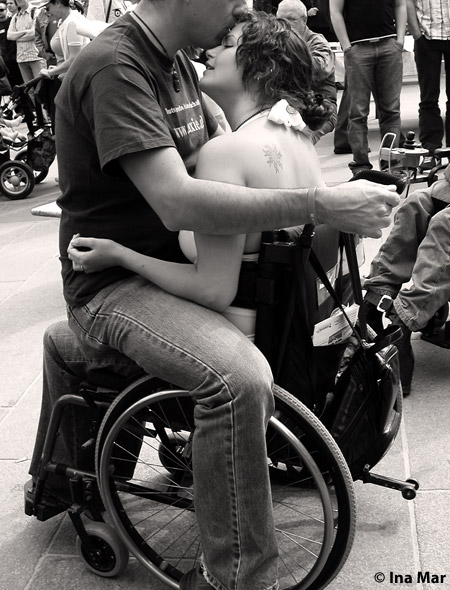
What keeps you writing your story?
by Mayumi-H | Aug 11, 2012 | Persona 4 Fan Fiction, Process
I follow a lot of people on Twitter. Most of them, I follow for fun: they’re insightful, amusing, friendly folk. But some are on my “understanding the business of writing” list: agents, editors, writers, publishers. Some of these people offer the same insightful, amusing, friendly 140-character glimpses into their daily lives that the others do. But, lately, I’ve seen a trend of negativity in this latter crowd that makes me wonder if I’m right for this want-to-be-published storytelling game.
One person offered up a tweet that was basically, “Don’t send me your manuscript if…” Another said, “Don’t expect me to read your book if…” A third mentioned, “Don’t even think of querying me if…”
Many of these “don’ts” are valid, valuable points to know and understand…but I’ve gotten a bit fed up with seeing so many “don’ts” all over the place. As someone who’s chosen an art (storytelling) for a personal outlet, I’ve had to deal with a lot of naysaying and doubts already, and it does very little for one’s sense of self-worth to be told “Don’t” all the time.
So, I’ve decided to share in this space my list of “dos.” Hopefully, at least one of these will help you get through your slower days.
- Do be engaged with your own story. Love it, to help it grow beyond those scratchings of loose plot outlines and vague character sketches.
- Do respect your readers’ intelligence. The good ones want and deserve a story worth the time of picking up and reading.
- Do finish your story, even if that first ending isn’t all you’d hoped and dreamed. Qualification and strength of your story will come from revision, but you can only get to the point of revision if you manage to finish the story first.
- Do try your best. You will be more proud and pleased with your story if you know you’ve given it your all. Other people will see it, too!
- Do listen to critique. You won’t be able to please everyone, of course, but any well-thought critique is worth considering.
- Do remember that this is your story. Write it for you, first. If your goal is publishing and making millions, you may have to revise parts (or all) of it…but it should always remain your story at its core.
And, most importantly:
![By Thomas Tolkien (Flickr: Surfer girl (2 of 2)) [CC-BY-2.0 (http://creativecommons.org/licenses/by/2.0)], via Wikimedia Commons](https://mayumi.amorphous.press/wp-content/uploads/sites/4/2012/08/256px-surfer_girl_2_of_2.jpg "Surfer_girl_(2_of_2)")
I had to link to this in honor of my surf mentor, Fiona. 🙂
Photo by Tom Tolkien.
by Mayumi-H | Aug 4, 2012 | Process
While listening to the radio the other day, “Radar Love” by Golden Earring came on. Now, this is admittedly a very fun driving song, but it’s not driving soundtracks I’m discussing in this post.
[youtube http://www.youtube.com/watch?v=Hw9CzSSk218?rel=0&w=420&h=315]
One of the oft-repeated lines in the song is “We’ve got a thing that’s called radar love.” What are the hidden messages in that lyric? It’s not important. What’s important is that Golden Earring has chosen to describe love as a “thing.”
Thing?
The term “thing” is, by definition, an object unable to be described (at least with ease). In a fun driving song, the meaning probably doesn’t matter. But, in a story – short story, novel, poem – a writer should be able to avoid using the word “thing” as a description.
Admittedly, I can go overboard with my descriptions (succinctness is something I need to work on). But, if you can’t describe an object – if, say, it’s wholly foreign or unfamiliar to the narrator – then at least liken it to a similar object, to give the reader an idea of what they’re supposed to be seeing or experiencing. Saying “thing” doesn’t even give your poor reader a clue!
…Unless, of course, you’re talking about The Thing. Because that Thing…no words can describe.
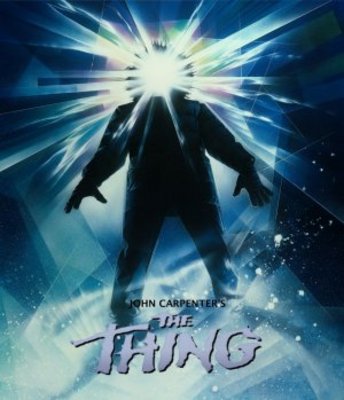
So, what about you? What are your description pet peeves?
by Mayumi-H | Jul 16, 2012 | Excerpts, Fearless, Process
In photography and cinematography, forced perspective is a technique that uses optical illusion to make an object look closer/larger or farther away/smaller than it actually is.

But this post is not about that sort of forced perspective.
I like to tell stories from a particular character’s viewpoint. I enjoy sticking with that one character through the chapter (or story), and relating his or her feelings to the reader through events, dialogue, and description. But everything that is seen, heard, or experienced in the story is how it relates to that particular character. An over-the-shoulder perspective, if you will.
I hate narratives that jump around from perspective to perspective – especially within a single chapter! – because it tends to leave me feeling like just an observer, and less invested in what’s happening to those characters. Some writers can get away with this multiple-perspective technique. It’s hard for me, though.
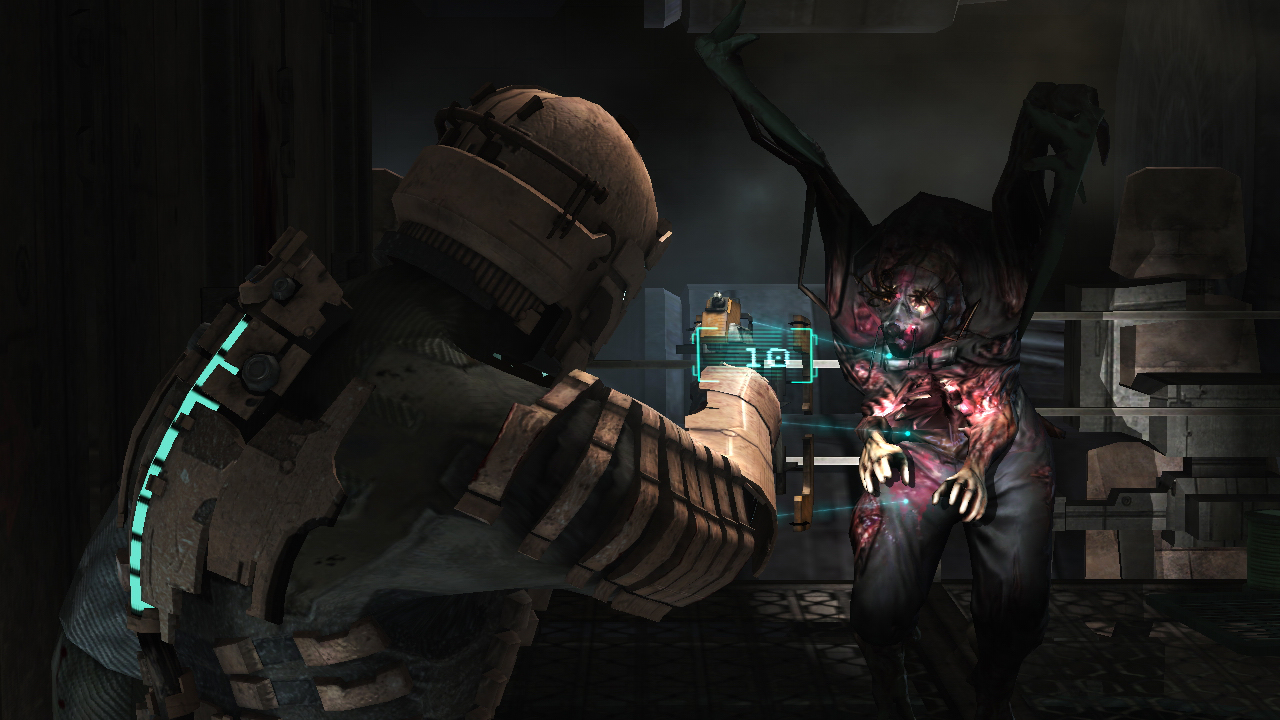
Get invested with your characters. Keep them close.
I like learning about a character through their triumphs and tragedies. Even though I know where that character will end up (usually), I love learning about him or her through telling their story. Perhaps it’s a crutch to fall into the same storytelling style for most of my work, but it’s also what I enjoy.
Here’s an example of what I mean:
She wasn’t the cool, salty sea that had filled his waking and dreaming senses from the moment of his birth, that much was true. She couldn’t slip frictionless through his fingers, or buoy him through careless mistakes that sent him tumbling from his board, or let him glide across her blue depths, like a bird skimming the tips of its wings through the froth.
But then, the sea didn’t warm him on chilled nights. It didn’t smell like jasmine or strawberries or mint, depending on its mood. It didn’t change its taste, either, from cool and creamy, to hot and bitter, and anything in between. And it couldn’t fill his arms, so soft and supple and warm, or cuddle him close in return. Amber was the only one who could do that.
Amber was the only one he wanted to do that.
I don’t think I could tell the same story I want to tell using a different narrative technique. Readers might want to know what’s going on in another character’s head, but I like keeping a bit of mystery. I go through my own life not knowing what other people think. Why not write stories the same way?
What’s your preferred storytelling perspective? Why?
by Mayumi-H | Jul 4, 2012 | Persona 4 Fan Fiction, Short Stories

I had quite a bit of fun with last week’s picture prompt; my head certainly went in a new direction from where I’d been before!
But the 100-Word Challenge for Grown-Ups this week (week 48) is a phrase prompt:
… I blamed it on the dog…
Julia says: “Your pieces should be 106 words long (the prompt plus 100).” Without further ado, here’s what I’m offering, this week:
“Blame the Hound”
“That girl definitely knows what she’s doing, let me tell you…!”
“Who? Anna?”
“No. Juliet.”
“Juliet? I thought you were out with Anna, last night?”
“Canceled.”
“She canceled?”
“No, I canceled. Keep up, would you, mate?”
“Why’d you cancel?”
“Have you seen Juliet?”
“So, what? Anna’s history, then?”
“Why would you say that?”
“Because you went out with another girl last night, that’s why!”
“It’s not like I told her I was going out with another bird, moron.”
“So, then, what was your excuse for not taking her out last night?”
“I blamed it on the dog.”
“You don’t have a dog.”
“She doesn’t know that!”
Another dialogue-only piece; sorry about that. Again, I didn’t see the need for any description; I think the words speak for themselves.
Personally, I appreciate a man who is faithful, kindly, sweet…all that good stuff. Yet, it’s fun to imagine the life of a hound. (You know, just so long as it’s all in my imagination!)
![By kallerna (Own work) [Public domain], via Wikimedia Commons](https://mayumi.amorphous.press/wp-content/uploads/sites/4/2012/08/256px-pharaoh_hound1.jpg "256px-Pharaoh_Hound")
What did you blame on the dog, this week?

![By Thomas Tolkien (Flickr: Surfer girl (2 of 2)) [CC-BY-2.0 (http://creativecommons.org/licenses/by/2.0)], via Wikimedia Commons](http://mayumi.amorphous.press/wp-content/uploads/sites/4/2012/08/256px-surfer_girl_2_of_2.jpg "Surfer_girl_(2_of_2)")


![By kallerna (Own work) [Public domain], via Wikimedia Commons](http://mayumi.amorphous.press/wp-content/uploads/sites/4/2012/08/256px-pharaoh_hound1.jpg "256px-Pharaoh_Hound")
Recent Comments