by Mayumi-H | Oct 20, 2012 | Process, Uncategorized
Part of what makes stories so much fun is the drama involved: Will the hero conquer the villain? Will the princess find her true love? Will the puppy make its way home? But, what happens when we find our characters strive more for realism than for drama?
Every story needs some kind of emotional resonance for it to have impact, whether it’s about war or heartbreak or family experience. Sometimes, though, our characters become so much their own people that they end up dictating where their own stories go. I’ve written scenes – necessary ones – for their dramatic effect…but I’ve also had to rewrite other scenes because the characters’ voices had developed so much since my initial plotting that their actions (or reactions) as I’d originally envisioned simply no longer held true to their natures.
What do you do in this situation? Do you let the character take over, possibly sacrificing the drama of the scene? Or, do you follow through with the original idea, possibly sacrificing believability for the character?
It’s okay to play Loosey Goosey in some instances: maybe the hero isn’t in his right mind at the moment and makes a snap judgment against character; maybe the heroine is torn by the conflict facing her and decides on one route over another because her values are confused. Written well, with the associating consequences, those options are totally valid. But, what do you do when your original big conflict becomes significantly less climactic than originally envisioned, because your darned MC has grown up too much over the course of the story?
I’m a big fan of sweeping epics, and last-minute, nerve-wracking climaxes where the audience is led to page after page to see what happens next. But I also believe in, well, believability in a story. The hero shouldn’t overcome the conflict just because the story needs a climax; he should do so because that’s what he has to do, to progress, grow, and change. It may make for less high drama, but it may also make for more realism.
But that’s just my opinion. Which do you prefer: realism or drama?
by Mayumi-H | Sep 26, 2012 | Short Stories
Another double-up of prompts, mostly because I’m too tired to concentrate on each without combining them (it’s been a long week).
Lillie McFerrin’s Five Sentence Fiction prompt is “ZOMBIE” and Julia’s 100-Word Challenge for Grown-Ups prompt is a picture:
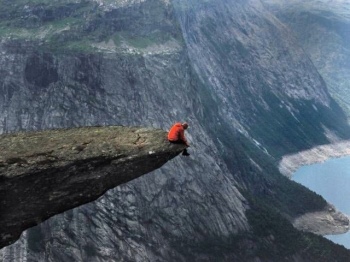
I’ve taken a fair amount of liberty with these prompts, but we write how we’re inspired.
“Last”
Palm pressed to the terminal, she paused, briefly, as the data jumped between synapses – maps, securcam feeds, personnel records, everything was open to her.
“Think you can find your friends?” the soldier asked, startling her concentration.
Pulling her hand away, she opened her eyes, empty black replacing the wild torrent of information, and frowned: how could people shuffle dead-eyed and dumb through their own world? The Institute’s doctors had said she was special, if alone – the last of her kind – and, now, she understood why.
“I may not see,” Imien said, “but that doesn’t make me blind.”
Some technobabble, but I liked getting into Imien’s head a bit, here; she’s one of the Stowaways I haven’t really examined.
What five sentences or 100 words did you write, this time?
by Mayumi-H | Sep 17, 2012 | Fearless, Short Stories
It’s a double-whammy this week, as I’m incorporating both Julia’s 100-Word Challenge for Grown Ups (week 57) prompt of “…returning to the routine…” and Lillie McFerrin’s Five Sentence Fiction prompt “AWKWARD” into the same post. Actually, it’s a triple whammy, since I’m also using Monday’s Fearless post to coincide.
To catch you up, Julia’s 100-Word Challenge for Grown-Ups gives writers a phrase or picture prompt, and we have 100 words (give or take; see the link for details) to write a story around it. Lillie’s Five-Sentence Fiction gives a one-word prompt, and we’re to write a flash fiction piece, consisting of only five sentences, that corresponds to said prompt.
I didn’t think I’d be able to participate at all this time around, as my schedule has been so hectic…but the pieces just fell together right, for me. (Maybe you disagree.)
“Hope In You”
![By Zelda F. Scott (Own work) [GFDL (http://www.gnu.org/copyleft/fdl.html) or CC-BY-SA-3.0-2.5-2.0-1.0 (http://creativecommons.org/licenses/by-sa/3.0)], via Wikimedia Commons](https://mayumi.amorphous.press/wp-content/uploads/sites/4/2012/09/256px-ballet_flat_in_the_westpark_in_bochum.jpg "Ballet_flat_in_the_Westpark_in_Bochum")
The bar turned slick beneath her hands, and her arms quivered all the way to her shoulders as her foot slid over the mat. It wasn’t from any thought or impulse, though, but mere weight, and that more than any pain or effort made the tears well.
Graceful, darling dancer: she’d never be that again, not if simply returning to the routine of standing on her dumb, labouring legs was this hard.
Spitting a plea for rest (and hating herself for it), she transferred to the chair, feeling weak, broken, hopeless.
Until she thought of him, and his smile, and pushed herself up again.
Julia’s prompt is a bit easier to recognize, here, than Lillie’s is, but hopefully you can see how I related this to both.
What awkwardness – or return to routine – did you describe, this time around?
by Mayumi-H | Sep 15, 2012 | Fearless, Process
I was going to talk about how it’s important to stay healthy while you’re working on any project (even a writing project), but I’ll save that for another time. Because I seem to be coming down with something, and because, earlier this week, my thought processes were waylaid by a few different posts about what it means to be a woman, and how society views women. I’m not taking a stance on whether one or both of these posts is right or wrong. They simply made me think. About myself, and specifically about my female characters.
I’ve talked about this conundrum before: how important (or not) it is for a character to be likable. It’s the same for women characters as it is for men. Whether they’re likable is often irrelevant, so long as they’re realistic. Likability should come – or not – based on how “real” they are: their sympathies, their reactions, their thoughts and feelings. My current main character is a man, and his big starting flaws are that he’s vain, distrustful, and driven by his biology, to put it nicely. He’s been an absolute blast for me to write, because – particularly early on – he’s free to be so one-dimensional in a lot of his interactions (“Let’s have fun!” “Let’s surf!” “Let’s f–k!”). Since it’s a romance story, he has to face and overcome (or run away from) certain obstacles introduced by the main female character.
This is where it gets tricky.
Women expect other women in stories – especially romances – to be intelligent, powerful, strong. But, not all women are powerful or strong in the same way.
Don’t get me wrong: I love women who kick ass. When I was a kid, I wanted so badly to be Vasquez from ALIENS: she was no-nonsense, stood toe-to-toe with any of her fellow (male) Marines, and went out in a blaze of glory. I loved that! My opinions of strong women haven’t changed as I’ve gotten older…but I have realised a woman doesn’t necessarily have to be a stoic smartgunner in order to be “strong.”

said kickass smartgunner
As I’ve become a woman, myself, I find I appreciate other women – fictional or real – who can embrace their femininity as a kind of strength. My last heroine was a woman who had a hard time reconciling being a fierce warrior but also a young woman who wanted to be loved by her man. That was a fun, enlightening journey to take with her, but I wanted to do something different for my next heroine.
Perhaps it’s because this current story is from a man’s point of view, but I don’t have a problem with my new heroine being girly, sassy, and sexy. (That’s what my hero likes about her!) That doesn’t mean she’s a wimp, though, and I don’t think I’m dismissing The Sisterhood by making her not be a fighter; her strength ends up manifesting in more subtle ways. Simply because she’s a nurturer rather than a hunter shouldn’t mean she’s any less valid as a strong woman character than a ball-busting CEO or tough-as-nails starship captain.
Of course, no one will ever be another USCMC PFC Vasquez, J. (Sidenote: Jenette Goldstein, who played Vasquez, is just as kick-ass as her breakout role. Just check out her shop at http://www.jenettebras.com/ – this is a lady who understands how great it is to be sexy!)
What does a “strong” woman character mean to you?
by Mayumi-H | Sep 8, 2012 | Process
Many of us have already been told it’s better to keep our prose as simple as possible: clear is better than clever, as they say. For the most part, I agree. And I’ve enjoyed my share of flowery prose! One part of a story that’s created something of a dividing line between me and other authors, though, is just that: the dividing line. To put it more broadly, the use of transitions.
Keeping in mind that adage of clearer being better than clever, I don’t see much point in dwelling on long, rambling transition sequences. But, I also think the dividing line is a bit of a cheat. Not only does that divider line (or space block, or asterisks, or whatever) take the reader out of the moment, it breaks the flow of the narrative. Sometimes, this doesn’t matter so much; if you’re changing perspective, for example, you want to separate the narrative flow somehow. But for a subtle scene or time change, I prefer to keep reading, rather than having my eye stutter over a visual division.
The rest of the afternoon passed quickly: the relatively uneventful walk back to the city centre, with St. Stephens and the train station, and a bit of aimless traipsing around the shops while the hotel prepared their late check-in room. Sally led them into a book shop where they stopped to listen to a charming children’s reading circle; Larry dallied in a retro art store with a selection of colorful and odd-looking international movie posters.
The quaintness was charming, of course, and they chatted along the way about both realistic potentialities and dreamy might-bes. But, through it all, there was still something missing, something hovering almost expectantly in the air between them: when they’d stop at a corner, or pause in conversation, or share a quiet look over tea and biscuits in a coffee shop.
Now, the above doesn’t really move the plot along any; all it does is take the reader from one scene to another. An editor might tell me to cut it. Simply removing these paragraphs between the two scenes makes my brain stutter, though, the same as putting in one of those divider lines would do. So, I’ve indulged myself with this transition.
What are your feelings on transitions in prose?


![By Zelda F. Scott (Own work) [GFDL (http://www.gnu.org/copyleft/fdl.html) or CC-BY-SA-3.0-2.5-2.0-1.0 (http://creativecommons.org/licenses/by-sa/3.0)], via Wikimedia Commons](http://mayumi.amorphous.press/wp-content/uploads/sites/4/2012/09/256px-ballet_flat_in_the_westpark_in_bochum.jpg "Ballet_flat_in_the_Westpark_in_Bochum")
Recent Comments