by Mayumi-H | Jan 26, 2013 | Persona 4 Fan Fiction, Short Stories
 I’m doing another double-up of writing prompts this week (because I’m not-so-secretly a masochist, I guess): for Lillie McFerrin’s Five Sentence Fiction prompt (“RINGING“), and Julia’s 100 Word Challenge for Grown-Ups prompt (“…the extreme weather meant….“, week 74). Since we’re to incorporate this specific phrase in Julia’s prompt, we’re allowed to go to 104 words, as opposed to the usual 100; Lillie’s guideline, as always, is to write the story in five sentences.
We’re suffering from some extreme weather of our own out here, with temperatures dropping well into the teens (that’s c-c-c-cold, for us), so my head went instantly to winter storm conditions, of which I have my fair share of personal experience. Of course, there are all kinds of storms….
“Storm Warning”

Robert Salmon (1775-circa 1851), via Wikimedia Commons [public domain]
Any moment, now, she’d stagger in, drenched and pale from fatigue, then become delightfully surprised by his quaint, candlelit effort…even if those candles were swiftly burning away. The extreme weather meant the whole lifeboat squad was out tonight, but they’d be back soon, and he’d have her to himself, tonight, and forever.
A knock; it wasn’t her, but her captain, looking drenched, pale: “You’d best sit down, son….”
He stumbled, the rest of the words drowning in the ringing in his head.
***
Sorry to go so dark, here. I wrote several versions of this post, and they were all similarly grim. I suppose the prompts just led me down that road.
Incidentally, does anyone else write multiple efforts for these prompts, until the “right one” clicks? If not (or if so), how did the extreme weather affect you, this week? Did you ring another kind of bell? Feel free to let me know!
by Mayumi-H | Jan 23, 2013 | Fearless, Process
Your story’s world is a full one. The story itself may be about only one or two main characters, but those people have family, friends, acquaintances, and enemies. And those people have beliefs, fears, experiences all their own. And, even if the reader never discovers these facets in full detail, it’s important for you to know who those people are. From the way they dress to the way they dance, their dietary habits or exercise routines, what they do for work and play, the magazines they read and the television programs they watch…all of these details will help you solidify in your head who each person is, and – in turn – make it easier for your readers to differentiate each character outside of name alone.
You don’t have to do all of these, of course (your time is likely better spent in the guts of your story), but pick a few for each of your characters, to help realize them more fully. Music is a great way to do this.
You’ve heard people say, “This is my song,” when they hear a particular tune. The same holds for the characters in your story. Whether a song describes that character, or it’s their own favorite song, music provides a way for you to make your world bloom. The best part? Unlike plotting your story or designing your world, giving your characters their own songs doesn’t have to take very much work at all!

If you hear a song on the radio (or on your mp3 player of choice), and you’re reminded of a particular character or story moment, set it aside in your mental list of story details. Listen to that song when you’re on your commute, doing your morning exercises, or washing the dinner dishes: this keeps you in-tune with your story and characters even while you have to do the necessary chores of your life. And keeping your story close to you this way (even if you don’t get the chance to write as much as you might like during the day) will help keep it immediate, so you don’t lose too much momentum while you’re, you know, living.
For example, whenever I hear Kevin MacLeod’s lovely piano track for “With the Sea”, it instantly puts me in the mood to write the about quaint coastal fishing village where my novel takes place. When I hear that opening guitar riff for “Bad Reputation” by Joan Jett, I am ready to write Ross’s confident swagger. And, when Pete Townshend sings about how to “Let My Love Open the Door”, Amber’s dimpled smile comes immediately to mind.
Some writers like to work in silence, so, for those of you who do, I won’t impose upon you the suggestion to create a playlist for your story. For those of you who enjoy a bit of music while you plot and pace, though, I’ve got to ask:
What’s your character’s theme song?
by Mayumi-H | Jan 19, 2013 | Fearless, Short Stories
It’s a threesome this week (no, not that kind of threesome, silly!), as I attempt to combine prompts from Julia’s 100-Word Challenge for Grown-Ups, Lillie McFerrin’s Five Sentence Fiction, and The Daily Post Writing Challenge!
Julia’s prompt this week (week 73) is “…the notes from the piano…“ Since we are to incorporate said phrase, we’re allowed to go to 105 words instead of the standard 100.
Lillie’s prompt this week is FORGOTTEN, and we’re to construct a story around that theme, in five sentences. We don’t have to use the prompt word itself.
The Daily Post’s prompt this week is Starting Over. There are no constraints on word or sentence count.
Let’s recap: 105 words, five sentences, with themes FORGOTTEN and Starting Over, and including the phrase “…the notes from the piano….”
This is my first time trying to pull together three different prompts around one idea, but I think I did pretty all right….
“Stagger to Sway”
Dance, he’d said, as if she could do; her dumb legs could barely remember how to stand, but for the clanking metal of her Zimmer frame! He’d never let her sit back, though: from grabbing her first wave, to making her step up from her chair.
“Everyone’s staring,” she protested.
Tugging her up, he muttered, “Forget ’em,” and, using his hips and shoulders, he took the place of her Zimmer and helped her lurch, inch by staggering inch, from sofa to open floor.
She cursed such slowness…but, in his arms, as the notes from the piano reached her, they began to sway, and she forgot.
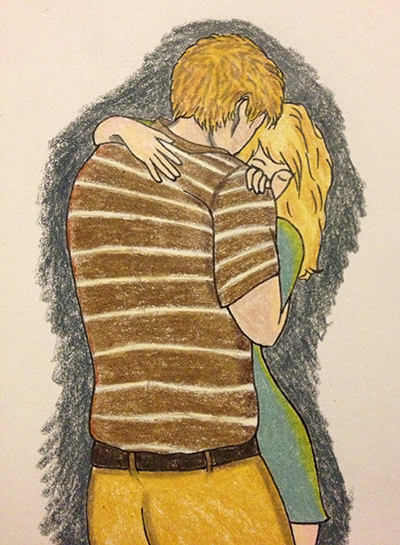
(Yes, I know, I forgot pockets. Just as in real life, though, I got distracted by the bum.)
This vignette derives from an early (scrapped) draft of a scene from Fearless, so the characters and conflict are likely familiar to my beta readers. However, the original scene read as too schmaltzy for that particular part of the story (and, you may think it does so, here, as well), but I’d still rather liked it, at its core.
People say you should never completely scrap what you write, because you never know when it may come in handy. I had to do a fair amount of tweaking, but this stands as one of those lucky moments when I got to go back to something I wished I’d been able to keep in the story proper.
Did you play with any of these prompts this week? What happened with the notes of the piano? What was FORGOTTEN? How did your characters Start Over? Let me know!
by Mayumi-H | Jan 16, 2013 | Process
Before we begin, when I say, “Good things happen in the dark,” I’m not talking about those fade-to-black sexy-time moments that occur between two consenting adults. (Though, those can be very good, make no mistake.) No, I’m talking about story, and when you (might) want to keep your readers in the dark.

Lance Henriksen

Sir Ian Holm
[Spoiler warning!] In ALIEN (1979), Holm plays Ash, an android. The tricky part – that “terrible place” to which Henriksen refers – is that the audience is not aware Ash is an android until rather late in the story. In the moment, the reveal is a surprise. Yet, on repeat viewings, with the luxury of knowing what’s to come, the audience can watch Holm’s performance and see the “secret” well in advance.
There’s an art to this, in writing as well as acting. (They are, after all, two ways to tell a story.)
Personally, I’m a fan of keeping my cards close to my vest. I believe story details should occur organically, in dialogue or description, without the reader feeling like they’re being hit over the head with a mallet.
Showing your hand too early?
Scott paused. “I’m not going to be here forever.”
“Why?” Ross asked with another offhanded snicker. “Where you going?”
“Truro,” Scott answered, the tone of his voice much more definite than simply conversational.
In the abrupt silence between them, they both slowed their pace, until they were standing in the sand, facing each other.
“Truro?” Ross said at last. “You mean, you’re leaving?”
Scott shrugged again, more naturally this time. “Venus’s job is there,” he said, “and the commute is brutal on her. Sometimes, she works twelve- or even fourteen-hour shifts! We had to rent a flat down there just so she’d have a place to crash when things get hairy.”
“What about the school? I thought you were going to take over for Pennington?”
Scott smiled wryly. “The only way he’s leaving that classroom is feet first. Besides, I can find a job anywhere.” He sighed. “Emma needs to be with her mum more. And we both miss Venus like crazy when she’s not at home.”
Ross blinked, then smiled, too, a bit sadly. “Well, I’ll miss you, mate. The girls, too.”
Scott chuckled, still melancholy but with a renewing trace of his usual humour. “You lads are rather like family, as well.” His stance relaxed as he gave another sigh. “But, we do what we have to do.”
The main point of the dialogue above is that, sometimes, we have to make sacrifices for the people we love; that’s the primary theme of the chapter from which the snippet is taken. But, I also put a tiny detail in there, one that doesn’t come to fruition until four chapters later.
Readers who were paying attention should recall the detail upon gentle reminder in that later chapter. Even if they don’t, I still give some brief explanation. But, it doesn’t come completely from left field…and, I don’t need to waste precious plot development time relating facts I’ve already put out there. Or – potentially worse – slowing down the drama or excitement of the moment by breaking away into exposition.
[Caveat:] Of course, different genres can approach this dilemma in different ways. Agatha Christie, for example, would dump so much information to the reader, in order to make her mysteries trickier to figure out before the end. (I’m guessing this is what happens to a real detective: they’re given lots of different facts, without easily knowing which ones are worth following. So, they have to pick and choose…or, follow them all.) This can certainly build tension and create red herrings, making for a fun – if not terribly straight or succinct – ride. But, a romance writer who wants to drop a baby-bomb on their main character may wait for a particular moment to make such a plot point known, to maximize shock or drama value, then go back and illustrate supporting details as a follow-up. This practice, too, can create opportunities for emotional growth.
So, there’s no one way to weave the little details of your story, or to let them known to your reader. But, what are your favored storytelling techniques for divulging information?
by Mayumi-H | Jan 12, 2013 | Fearless, Uncategorized
In the year I’ve had this little blog space, I’ve tried to keep to an update schedule of three times per week: I reserved Mondays for talking about and posting some pages from the Fearless novel, I kept Wednesdays for creative writing prompts (usually 100-Word Challenges for Grown-Ups or Five Sentence Fictions), and on Saturdays, I’ve been posting about my writing process in general. In going over my annual statistics report, though (and looking at the hits and comments I get), I’m wondering if three regular topics is too many.

The (overwhelming?) power of 3
I don’t always have time for them they don’t always interest me. I like giving readers insight into Fearless (which I’ve taken to calling my beautiful mess), but I often use it as an example for my Saturday process posts…and, most readers around here have their own stories they want to tell, so I’m thinking my posting parts of the novel on Mondays is just plain old boring for them. Plus, many of us have made new year resolutions to buckle down with our own writing this year (I know I’ve done), so maybe three times a week is simply too much to take in.
In light of these considerations, I’ve decided to try updates twice a week, instead of three times per week (at least for the next six months). Since my photo/art blog already posts on Mondays, starting this week, Process posts (about writing and the current work in progress/WIP) will occur on Wednesdays, and writing prompt responses/original short fiction posts will occur on Saturdays.
Hopefully, this will help me write better posts, read/comment on more of your posts, and let me concentrate a bit more on my storytelling.
[polldaddy poll=6823403]
What schedule do you keep for your blogging? Do you keep a schedule? How many updates do you consider not enough, too many, or just right?
by Mayumi-H | Jan 9, 2013 | Short Stories

Week 72 for Julia’s 100-Word Challenge for Grown-Ups is a phrase prompt:
…you said you’d do WHAT?….
We have to incorporate the phrase above, but that means we get to use 105 words, rather than just 100.
My entry is actually a discarded holiday story, so I hope you won’t mind me going back in time a bit….
By Leaps and Bounds
“You said you’d do-”
“What?! I said, I’d help with rehearsal!”
“But, you know the routine. And we need a male dancer-”
“I’m not a dancer.”
“So, it’s not your preferred sport.”
“It’s not a sport at all! Sports are about athletes, and competition, not…glittered faeries jumpin’ about in tutus-”
“You wouldn’t wear a tutu-”
“I don’t care! I’m not doing it.”
“Fine. I’ll ask Joseph.”
“Wh-! Joe? He moves like a duck!”
“I admit, he’s not as good as you-”
“He can’t even land a proper sissonne-!”
“…Shall I take that as a yes?”
“Damn.”
“Don’t worry, love. You’ll make a brilliant Mouse King!”
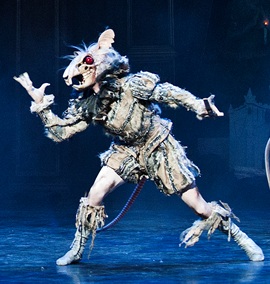
James Streeter (ENB) as the Mouse King. Public publicity photo by Patrick Baldwin.
My sister and I used to have a tradition of writing holiday stories, which we’d then trade on Christmas morning to read. This was an inexpensive and fun treat (especially before we had jobs and thus money to spend), and it kept us busy so we weren’t clamoring around the tree at 5am. As growing girls tend to do, though, we fell out of this tradition long ago.
I still think about those holiday stories. With perhaps one exception, they weren’t very good (mine weren’t, anyway), but it was a special kind of joy to know someone was eagerly awaiting the words I’d written. I think that’s why I take part in these challenges: to give a little brightness to at least one person’s day.
WHAT did your characters do, this week?
by Mayumi-H | Jan 7, 2013 | Excerpts, Fearless
(Or, visualisation, if it please you, Beth. ;))
I think writers should be as visual as traditional artists. Perhaps more so, because we need to provide description for a reader, without the benefit of a comic panel or moving image. But, dwelling on description overlong can become tedious for a reader, and that we never want.
“Good morning,” he replied, coming to a slow stop in front of her. He propped his board beside him, shielding her from the bright sun; it didn’t make her any less pretty.
“Ah…Amber, yeah?” he said, feigning blase non-involvement.
She nodded. “And you’re…” She paused a moment. “Fearless?”
He snorted. “Close enough. Ross.”
“Right,” she said. Though from her smile, he guessed she hadn’t needed the reminder, either.
He raised his brow at her. “You need help with something?”
“You said I should stop by,” she reminded him, as she glanced up at the sign of the shop, with its graffiti-style lettering. Looking back to him, she smiled again. “So, here I am.”
“Here you are,” he echoed, as he felt himself break into a smile, too.
That’s the only time the shop sign is mentioned, but I still came up with a design:
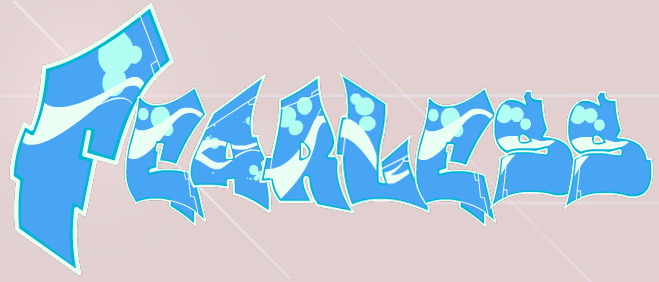
The Fearless shop logo
Mostly, I did it because I like playing around with graffiti. But, I also think it’s important for a writer to have a firm vision of the world in which their characters live. The more we know – either in our heads or on the page – the less we need to explain to the reader: the details usually invariably find their way into the story on their own.
I design (or, at least, I keep detailed notes for) every location of any import in my stories, from Ross’s living loft above the shop, to Amber’s hospital room, to the Truro flat. I did the same for a Japanese apaato and a country ryokan, a starfaring tramp tanker and a soldier’s little love nest. Because understanding where your characters are will help everyone understand where they go, how, and why (we call that “blocking” in theatre-speak).
How do you design your locations in your stories?
by Mayumi-H | Jan 5, 2013 | Process
“F***,” Ross swore to himself as soon as he’d closed the door to the loo. Another quietly hissed, “F***,” as he wrenched the metal faucet handle open, and a third as he clenched his fingers beneath the flow of water.
Shouldn’t have come what are you doing here you don’t belong Sam‘s right–
And, of a sudden looking up into the mirror above the sink, he saw the reflection of that oddly proper but still charming wave walker, with the blond hair and clear blue eyes, in the dark shirt and silk tie, and stopped.
“No,” he told that man in a whisper. “It’s just one night. You can do this.” He splashed some water on his face, to cool the flush of red behind his eyes, and looked into the mirror again with a determined stare. “Just keep your bloody mouth shut.”
Apologies for the coarse language above, but I wanted to illustrate a technique used quite a bit in fiction: the inner monologue. Or, put more basically, thoughts in a character’s head.

I try not to dwell in a character’s head overmuch. There are times when it’s convenient to make a point, but I’m well aware that the inner monologue can be a crutch, where the danger is I’ll be informing the reader (telling) of a character’s motivations or feelings rather than letting the character’s actions make those motivations and feelings known more organically (showing).
Almost worse than this fallback to telling, though, is when I see some writers use the inner thought convention in a way that is so formal it becomes unnatural, cumbersome, even. Thoughts become like words spoken aloud, as you might see in a comic book thought bubble…
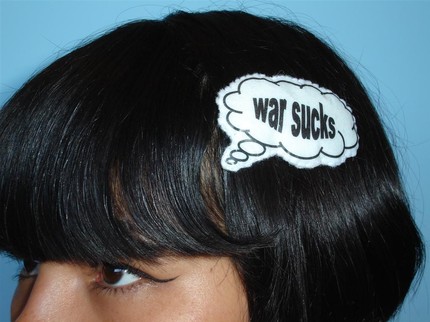
…when I don’t know of anyone who thinks in structured sentences.
Now, I don’t take issue with a simple thought such as “War sucks,” which is basic and visceral: the emotion is broken down pretty much to its core as can be done. What I do roll my eyes at is a chunk of text broken out as a character’s inner thoughts that is structured so much like a proper paragraph that it could just as well be spoken. That it probably should be spoken:
Perhaps I should go to her, standing there in front of her locker, and ask her if she’d like to go to the dance with me. Just go up and ask her. How hard could that be? If she says yes, maybe I could bring her flowers, too, to show her how much I like her. But what kind should I get? She’s said peonies are her favorite, but what if the florist doesn’t have any peonies? What are peonies, anyway? Oh, blast! Why does young love have to be so complicated?
This is overdoing it, of course, but you get the idea. How boring is that, to be told outright – through an inner monologue, no less! – what the character is thinking and feeling? How much more interesting would it be to guess a little:
He shifted on his feet as he watched her giggle among her friends. Even the way she opened the locker door was full of grace, fingers clutching her books like they were delicate flowers.
Didn’t she like flowers? He’d heard her talk once about peonies – whatever they were – in some conversation or other. Maybe, if he came to her with those before he asked her to the dance, she might notice him, for once….
Actually, I’m not sure if that’s better or worse. 😉 I do know it’s more interesting to write, though, so hopefully it’s more interesting to read.
The inner monologue is a perfectly acceptable convention. Just remember that it shouldn’t be your answer to all explanations. Thoughts are in our heads for a reason. Words from our lips just the same.
Do you employ the inner monologue? If so, how? And, which of those examples do you prefer, if either?
by Mayumi-H | Jan 2, 2013 | Persona 4 Fan Fiction, Short Stories
I’m doubling-up on prompts again! (Why not start the year off right?)
Lillie McFerrin’s Five Sentence Fiction prompt is “ENDING” and week 71’s prompt for the 100-Word Challenge for Grown-Ups over at Julia’s Place is “…as midnight struck….”
As a side note, I rarely put forward for Julia’s challenges anything I personally would deem above and/or beyond the PG rating certificate (Lillie’s challenge comes with no caveat about rating, though I think we police ourselves well enough), but I’m rather liberal about mature subjects, myself. I leave you to be the judge if this is inappropriate.
“Between Them”

The first time they heard midnight strike together, there was just the job between them: script, soundtrack, timecode, a story due by deadline.
The second time it happened, though, they passed between them their own stories, of husbands, wives, and wanton regrets, kept secret until that moment.
By the third, between them there was nothing at all, save the taste of wine on fevered lips…and prospects of forever whispered in his dark hotel room.
So, on the fourth, while still wrapped around each other, he asked the question smoldering between them. And, in his bed, as midnight struck, she answered with a kiss.
I’ve stayed away from Robb and Emma for a while, but this double-edged sword of a mixed prompt plucked at my heartstrings a bit too much to ignore.
What ENDING did you create? What happened when midnight struck? Let me know!
by Mayumi-H | Dec 31, 2012 | Fearless, Process

Amber smoothed her hand over his tie, flattening it against the line of buttons on his shirt, and looked up at him, her expression an odd mix of hesitant and hopeful.
“I know this isn’t easy for you,” she muttered. “But, I really want us to try and have a pleasant evening. All right?”
Ross did his best to return her a smile, but it didn’t quite work. Because as much as he’d said (and wanted to believe) Sam was no threat to him, stepping onto her turf, into her sphere of influence, for the first time since that Christmas past – the night everything changed – was something entirely different.
Finally, he could only shrug, and say, “I’m here, aren’t I?”
The original title of this post was “Villains and Lovers,” but I thought the title for the 1921 film (which still is above) – “There are No Villains” – was more appropriate. Because one man’s villain is another man’s lover, just as one man’s insanity is another man’s genius, or one man’s trash is another man’s treasure.
In the snippet above, the character of Sam stands as an antagonist for Ross. But, as the story is told only from Ross’s perspective, I want the reader to make his or her own judgments about Sam, apart from Ross’s prejudices. They need to do, if they’re to get a fuller picture of who she is and why she does what she does. Because, as I’ve said, one man’s villain is another man’s lover.
Villains in themselves can be a tricky lot. Some – a few – are absolute: devils incarnate who serve only to tempt, subvert, and destroy. More often, though (or, at least, more interesting), are the villains who exist as three-dimensional characters. In fact, your villain probably should have more than one dimension to them. If they just want to press that red button that blows up the world, there’s not much conflict that can’t be solved with a solid punch to the jaw (or a swift-talking mediator, if you prefer). But if your villain is a character in his or her own right – with feelings, motivations, and (dare I say it?) sympathies – that can and probably will create much more depth for all of your characters, not just that one.
What kind of villains are your favorites to read, or to write? Do you have suggestions of great villains to check out? (Of course, all of this applies only if your antagonist is sentient. You can’t exactly reason with a typhoon or a tumbling asteroid. Or, maybe you’ve figured out a way to do that, in which case, I really want to read your story!)

 I’m doing another double-up of writing prompts this week (because I’m not-so-secretly a masochist, I guess): for Lillie McFerrin’s Five Sentence Fiction prompt (“RINGING“), and Julia’s 100 Word Challenge for Grown-Ups prompt (“…the extreme weather meant….“, week 74). Since we’re to incorporate this specific phrase in Julia’s prompt, we’re allowed to go to 104 words, as opposed to the usual 100; Lillie’s guideline, as always, is to write the story in five sentences.


_1.jpg)
Recent Comments