by Mayumi-H | Feb 6, 2013 | Persona 4 Fan Fiction, Process
I think all of us writers write for joy: we’re driven to create worlds with words, just as painters create with their palettes and brushes. But, some of us are looking to push further with our words, to reach a greater audience. We want that valuable place on someone’s bookshelf (or a tab in their e-reader).
There are many, many stages to becoming a published writer. First, you’ve got to have a story. You write, you edit, you tweak. You set it aside, write something else, come back again. You send out copies to betas. You find a critique partner. You get yourself a story editor and a copy editor (maybe they’re one and the same, maybe not). You tap the brain of your old journalism buddy to help you write a tagline. You treat your friend in advertising for help with your sales pitch. You scour the Internet for tips on writing a great query letter. I could keep adding to this list forever…!
There are some terms and abbreviations many if not all writers use, these days. I’m going to start off a list of them, because I know some of them puzzled me when I first saw them. So, hopefully, you can learn from my ignorance. (Hey, at least I’m good for something!)

I write in English…yet, sometimes, it feels like a foreign language!
- ARC – Advance Reading Copy (or sometimes Advance Review Copy), an almost-ready-for-publication copy of the manuscript (which may still have a few errors) that is sent out prior to publication in order to be reviewed. (provided by Vanessa-Jane Chapman)
- Beta Reader (beta): A beta reader is a draft-reader. Often, someone with whom you can bounce off your early draft ideas. Some folks like to offer beta readers a very loose first draft; others give their betas a close-to-finished product. That’s your decision, as a writer. Many family members or friends should be considered beta readers, since – odds are – they’re not professional writers and/or editors…and their job is really to boost your confidence. Beta readers can also become Critique Partners.
- Bio: Not the class at school, but your Author’s Biography. Your biography is where you can toot your own horn about your writing/publishing experience, your outlook, what awards you’ve won, and so on. Be careful to keep this short and sweet, especially if you’re writing a Query letter.
- Critique Partner (CP): For the longest time, I’d see people mention CP and think they were talking about Unix commands! Then, I realized they meant Critique Partners. A critique partner is like a beta reader on steroids. This is someone you truly trust with your story, to show you where there are plot holes and lag, but also where your dialogue is fresh and your description vivid. It’s a marriage relationship between writer/reader: you give honest, helpful critique, and you get honest, helpful critique in return. It’s not a relationship to enter into lightly. Critique Partners are sometimes a writer’s last personal step before they ship a manuscript off to an editor or agent.
- Draft: A story in not-yet-finished form. Some writers make only one – their first – draft, before shipping their story off to an editor, agent, or publisher. (I think I’m on draft 6 or 7 of my novel….) It all depends on the type of writer you are.
- Graf/Graph: A shortened way of writing “paragraph.” It’s got nothing to do with statistics or charts.
- Ed: Not just some random guy (or horse), “Ed” is short for “Editor,” one of the most valuable partners for your book you’re likely going to have. You might already have a good story, but a competent and careful editor can make that good story a great one.
- Hook: A concise summary of your story, usually no more than one sentence. AKA the Tagline for your book.
Some folks also use the term “hook” to refer to the bit at the end of a chapter that will make the reader want to keep turning your pages. No matter how you use the term, though, it almost universally refers to the reason to keep reading.
- Manuscript (MS): MS is just a faster way to write “manuscript,” which is just another word for your story. Stories in many stages can be manuscripts, but I personally favor reserving the term for a story in its completed form (edited or not); I wouldn’t call a series of scenes mashed together into the same document a “manuscript.”
- Mini-Synopsis: Used for Query letters. See “Synopsis” for an explanation … only the Mini-Synopsis is much more concise, usually only one paragraph.
- Multiple Submissions/Simultaneous Submissions – Important to understand the difference because some publishers/agents specify that they don’t accept one or the other. So, Multiple Submissions is sending more than one book idea or proposal to a particular publisher or agent at the same time. Simultaneous Submissions is sending out one book idea or proposal to more than one publisher or agent at the same time. (provided by Vanessa-Jane Chapman)
- Protag: Short for “protagonist,” or, the hero(ine) of your story. Funnily enough, I see/use the term protag all the time, yet I don’t think I’ve ever seen anyone use the shortened “antag” for “antagonist.” Go figure.
- Query: A query is the letter you send to agents and publishers. It consists of three parts (usually a paragraph each): your Hook, your Mini-Synopsis, and your Author’s Bio. Go here for some more in-depth discussion on writing a query letter.
- Synopsis: Um, just what it says: a concise synopsis of what your story is about. Pluck a book from your shelf and look at the back cover or inside jacket. Usually, that’s where you’ll find the synopsis. Study how to write these, especially if you want to write a successful Query letter.
- Tagline: See “Hook.”
- WIP – Work in Progress. The current writing piece you are working on. (provided by Vanessa-Jane Chapman)
I know I’m missing terms you probably use all the time. So, please feel free to add them in the comments section, and I’ll update this list periodically. If you supply the definition, I’ll be certain to link back to your blog or site, too, so don’t be shy!
by Mayumi-H | Jan 30, 2013 | Process
Many artists – sculptors, poets, fantasists of all kinds – attribute inspiration for their work to what they call their Muse.

“Hesiod and the Muse” – public domain image
Not to be cruel. Because, as artists, we’re all rather flighty individuals, with our minds dwelling at least a little bit in the clouds. That’s okay. Without dreamers, society would be pretty boring. Actually, it likely would have died away by now, without any high thinkers, who wrote some of the most important words of our civilization, from “Shall I compare thee to a summer’s day?” to “We hold these truths to be self-evident….”
But ascribing your talent to some sort of divine guidance is – oh, I’m just going to say it. It’s kooky. More than that, though (and I’m going to catch a lot of flak for this, I know), it’s lazy.
Now, before my ever-dwindling group of blogging and writing friends decides to pull out the lynch ropes, let me clarify.
I’m not talking about artists who decide they need to step back from their art and re-prioritize; those folks know they’re just putting a muzzle on their Muse for a bit. Nor am I talking about the artists who simply know themselves well enough to decide they’ll make their art when it suits them, all in good time.
I’m referring to the people out there who complain they have no inspiration to create…while they can still pick up a videogame controller for hours on end, or head out to the pub the whole weekend long. That has nothing to do with the attention of your Muse.
Now, I completely understand the charm of having some seraphic creature looking over your shoulder, telling you which way to move your pen. And I, myself, believe that – in the throes of a story – a character or characters can take over, using their voices to weave new and intricate tales I’d never even considered while I was in the plotting phase.
But, don’t be misled by the flowery notion of a Muse. Those character voices are your voices. Any new paths toward which they may pull you are functions of your own creative subconscious. It’s a wonderful experience, to guide a story in an unexpected direction, based on the whim of a single word or phrase. But you have created that word, those phrases, that heretofore unknown story arc that turns your hunter into the hero, or your princess into the warrior demon. It didn’t come from any outside force.

What are you waiting for?
It’s not the idea of the Muse with which I take issue. I take issue with the idea of waiting on a Muse to move your pen (or hammer, brush, bow, or lens). That takes the power of creation away from the artist. Even worse, it takes away the responsibility for that creation. When an artist whines, “I’m waiting for my Muse,” that’s just an excuse for being lazy.
You cannot wait for some capricious, aetherial harlot to come knocking on your door, tapping at your shoulder, whispering into your ear that now is the time for you to make real all your hopes and dreams. No outside force is going to make your art for you. You are the only one capable of that. You. Or, I. Nobody else.
Blaming a Muse for lack of inspiration or failure to produce the story, the music, the picture you want is a cop-out. When you call – when you make the choice to apply yourself to your art, whatever it may be – your Muse will come. And, if she doesn’t, you go get her. You grab her by her flowing toga, and you drag her over to your workstation. Because you can’t afford to wait for her.
Because you are your own Muse.
[youtube http://www.youtube.com/watch?v=3C3poU_0sK4]
Now, for those of you still with me after that little tirade, tell me: How do you motivate yourself?
by Mayumi-H | Jan 23, 2013 | Fearless, Process
Your story’s world is a full one. The story itself may be about only one or two main characters, but those people have family, friends, acquaintances, and enemies. And those people have beliefs, fears, experiences all their own. And, even if the reader never discovers these facets in full detail, it’s important for you to know who those people are. From the way they dress to the way they dance, their dietary habits or exercise routines, what they do for work and play, the magazines they read and the television programs they watch…all of these details will help you solidify in your head who each person is, and – in turn – make it easier for your readers to differentiate each character outside of name alone.
You don’t have to do all of these, of course (your time is likely better spent in the guts of your story), but pick a few for each of your characters, to help realize them more fully. Music is a great way to do this.
You’ve heard people say, “This is my song,” when they hear a particular tune. The same holds for the characters in your story. Whether a song describes that character, or it’s their own favorite song, music provides a way for you to make your world bloom. The best part? Unlike plotting your story or designing your world, giving your characters their own songs doesn’t have to take very much work at all!

If you hear a song on the radio (or on your mp3 player of choice), and you’re reminded of a particular character or story moment, set it aside in your mental list of story details. Listen to that song when you’re on your commute, doing your morning exercises, or washing the dinner dishes: this keeps you in-tune with your story and characters even while you have to do the necessary chores of your life. And keeping your story close to you this way (even if you don’t get the chance to write as much as you might like during the day) will help keep it immediate, so you don’t lose too much momentum while you’re, you know, living.
For example, whenever I hear Kevin MacLeod’s lovely piano track for “With the Sea”, it instantly puts me in the mood to write the about quaint coastal fishing village where my novel takes place. When I hear that opening guitar riff for “Bad Reputation” by Joan Jett, I am ready to write Ross’s confident swagger. And, when Pete Townshend sings about how to “Let My Love Open the Door”, Amber’s dimpled smile comes immediately to mind.
Some writers like to work in silence, so, for those of you who do, I won’t impose upon you the suggestion to create a playlist for your story. For those of you who enjoy a bit of music while you plot and pace, though, I’ve got to ask:
What’s your character’s theme song?
by Mayumi-H | Jan 16, 2013 | Process
Before we begin, when I say, “Good things happen in the dark,” I’m not talking about those fade-to-black sexy-time moments that occur between two consenting adults. (Though, those can be very good, make no mistake.) No, I’m talking about story, and when you (might) want to keep your readers in the dark.

Lance Henriksen

Sir Ian Holm
[Spoiler warning!] In ALIEN (1979), Holm plays Ash, an android. The tricky part – that “terrible place” to which Henriksen refers – is that the audience is not aware Ash is an android until rather late in the story. In the moment, the reveal is a surprise. Yet, on repeat viewings, with the luxury of knowing what’s to come, the audience can watch Holm’s performance and see the “secret” well in advance.
There’s an art to this, in writing as well as acting. (They are, after all, two ways to tell a story.)
Personally, I’m a fan of keeping my cards close to my vest. I believe story details should occur organically, in dialogue or description, without the reader feeling like they’re being hit over the head with a mallet.
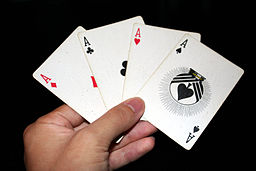
Showing your hand too early?
Scott paused. “I’m not going to be here forever.”
“Why?” Ross asked with another offhanded snicker. “Where you going?”
“Truro,” Scott answered, the tone of his voice much more definite than simply conversational.
In the abrupt silence between them, they both slowed their pace, until they were standing in the sand, facing each other.
“Truro?” Ross said at last. “You mean, you’re leaving?”
Scott shrugged again, more naturally this time. “Venus’s job is there,” he said, “and the commute is brutal on her. Sometimes, she works twelve- or even fourteen-hour shifts! We had to rent a flat down there just so she’d have a place to crash when things get hairy.”
“What about the school? I thought you were going to take over for Pennington?”
Scott smiled wryly. “The only way he’s leaving that classroom is feet first. Besides, I can find a job anywhere.” He sighed. “Emma needs to be with her mum more. And we both miss Venus like crazy when she’s not at home.”
Ross blinked, then smiled, too, a bit sadly. “Well, I’ll miss you, mate. The girls, too.”
Scott chuckled, still melancholy but with a renewing trace of his usual humour. “You lads are rather like family, as well.” His stance relaxed as he gave another sigh. “But, we do what we have to do.”
The main point of the dialogue above is that, sometimes, we have to make sacrifices for the people we love; that’s the primary theme of the chapter from which the snippet is taken. But, I also put a tiny detail in there, one that doesn’t come to fruition until four chapters later.
Readers who were paying attention should recall the detail upon gentle reminder in that later chapter. Even if they don’t, I still give some brief explanation. But, it doesn’t come completely from left field…and, I don’t need to waste precious plot development time relating facts I’ve already put out there. Or – potentially worse – slowing down the drama or excitement of the moment by breaking away into exposition.
[Caveat:] Of course, different genres can approach this dilemma in different ways. Agatha Christie, for example, would dump so much information to the reader, in order to make her mysteries trickier to figure out before the end. (I’m guessing this is what happens to a real detective: they’re given lots of different facts, without easily knowing which ones are worth following. So, they have to pick and choose…or, follow them all.) This can certainly build tension and create red herrings, making for a fun – if not terribly straight or succinct – ride. But, a romance writer who wants to drop a baby-bomb on their main character may wait for a particular moment to make such a plot point known, to maximize shock or drama value, then go back and illustrate supporting details as a follow-up. This practice, too, can create opportunities for emotional growth.
So, there’s no one way to weave the little details of your story, or to let them known to your reader. But, what are your favored storytelling techniques for divulging information?
by Mayumi-H | Jan 5, 2013 | Process
“F***,” Ross swore to himself as soon as he’d closed the door to the loo. Another quietly hissed, “F***,” as he wrenched the metal faucet handle open, and a third as he clenched his fingers beneath the flow of water.
Shouldn’t have come what are you doing here you don’t belong Sam‘s right–
And, of a sudden looking up into the mirror above the sink, he saw the reflection of that oddly proper but still charming wave walker, with the blond hair and clear blue eyes, in the dark shirt and silk tie, and stopped.
“No,” he told that man in a whisper. “It’s just one night. You can do this.” He splashed some water on his face, to cool the flush of red behind his eyes, and looked into the mirror again with a determined stare. “Just keep your bloody mouth shut.”
Apologies for the coarse language above, but I wanted to illustrate a technique used quite a bit in fiction: the inner monologue. Or, put more basically, thoughts in a character’s head.

I try not to dwell in a character’s head overmuch. There are times when it’s convenient to make a point, but I’m well aware that the inner monologue can be a crutch, where the danger is I’ll be informing the reader (telling) of a character’s motivations or feelings rather than letting the character’s actions make those motivations and feelings known more organically (showing).
Almost worse than this fallback to telling, though, is when I see some writers use the inner thought convention in a way that is so formal it becomes unnatural, cumbersome, even. Thoughts become like words spoken aloud, as you might see in a comic book thought bubble…

…when I don’t know of anyone who thinks in structured sentences.
Now, I don’t take issue with a simple thought such as “War sucks,” which is basic and visceral: the emotion is broken down pretty much to its core as can be done. What I do roll my eyes at is a chunk of text broken out as a character’s inner thoughts that is structured so much like a proper paragraph that it could just as well be spoken. That it probably should be spoken:
Perhaps I should go to her, standing there in front of her locker, and ask her if she’d like to go to the dance with me. Just go up and ask her. How hard could that be? If she says yes, maybe I could bring her flowers, too, to show her how much I like her. But what kind should I get? She’s said peonies are her favorite, but what if the florist doesn’t have any peonies? What are peonies, anyway? Oh, blast! Why does young love have to be so complicated?
This is overdoing it, of course, but you get the idea. How boring is that, to be told outright – through an inner monologue, no less! – what the character is thinking and feeling? How much more interesting would it be to guess a little:
He shifted on his feet as he watched her giggle among her friends. Even the way she opened the locker door was full of grace, fingers clutching her books like they were delicate flowers.
Didn’t she like flowers? He’d heard her talk once about peonies – whatever they were – in some conversation or other. Maybe, if he came to her with those before he asked her to the dance, she might notice him, for once….
Actually, I’m not sure if that’s better or worse. 😉 I do know it’s more interesting to write, though, so hopefully it’s more interesting to read.
The inner monologue is a perfectly acceptable convention. Just remember that it shouldn’t be your answer to all explanations. Thoughts are in our heads for a reason. Words from our lips just the same.
Do you employ the inner monologue? If so, how? And, which of those examples do you prefer, if either?
by Mayumi-H | Dec 31, 2012 | Fearless, Process
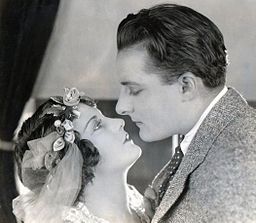
Amber smoothed her hand over his tie, flattening it against the line of buttons on his shirt, and looked up at him, her expression an odd mix of hesitant and hopeful.
“I know this isn’t easy for you,” she muttered. “But, I really want us to try and have a pleasant evening. All right?”
Ross did his best to return her a smile, but it didn’t quite work. Because as much as he’d said (and wanted to believe) Sam was no threat to him, stepping onto her turf, into her sphere of influence, for the first time since that Christmas past – the night everything changed – was something entirely different.
Finally, he could only shrug, and say, “I’m here, aren’t I?”
The original title of this post was “Villains and Lovers,” but I thought the title for the 1921 film (which still is above) – “There are No Villains” – was more appropriate. Because one man’s villain is another man’s lover, just as one man’s insanity is another man’s genius, or one man’s trash is another man’s treasure.
In the snippet above, the character of Sam stands as an antagonist for Ross. But, as the story is told only from Ross’s perspective, I want the reader to make his or her own judgments about Sam, apart from Ross’s prejudices. They need to do, if they’re to get a fuller picture of who she is and why she does what she does. Because, as I’ve said, one man’s villain is another man’s lover.
Villains in themselves can be a tricky lot. Some – a few – are absolute: devils incarnate who serve only to tempt, subvert, and destroy. More often, though (or, at least, more interesting), are the villains who exist as three-dimensional characters. In fact, your villain probably should have more than one dimension to them. If they just want to press that red button that blows up the world, there’s not much conflict that can’t be solved with a solid punch to the jaw (or a swift-talking mediator, if you prefer). But if your villain is a character in his or her own right – with feelings, motivations, and (dare I say it?) sympathies – that can and probably will create much more depth for all of your characters, not just that one.
What kind of villains are your favorites to read, or to write? Do you have suggestions of great villains to check out? (Of course, all of this applies only if your antagonist is sentient. You can’t exactly reason with a typhoon or a tumbling asteroid. Or, maybe you’ve figured out a way to do that, in which case, I really want to read your story!)



_1.jpg)
Recent Comments