by Mayumi-H | Aug 11, 2012 | Persona 4 Fan Fiction, Process
I follow a lot of people on Twitter. Most of them, I follow for fun: they’re insightful, amusing, friendly folk. But some are on my “understanding the business of writing” list: agents, editors, writers, publishers. Some of these people offer the same insightful, amusing, friendly 140-character glimpses into their daily lives that the others do. But, lately, I’ve seen a trend of negativity in this latter crowd that makes me wonder if I’m right for this want-to-be-published storytelling game.
One person offered up a tweet that was basically, “Don’t send me your manuscript if…” Another said, “Don’t expect me to read your book if…” A third mentioned, “Don’t even think of querying me if…”
Many of these “don’ts” are valid, valuable points to know and understand…but I’ve gotten a bit fed up with seeing so many “don’ts” all over the place. As someone who’s chosen an art (storytelling) for a personal outlet, I’ve had to deal with a lot of naysaying and doubts already, and it does very little for one’s sense of self-worth to be told “Don’t” all the time.
So, I’ve decided to share in this space my list of “dos.” Hopefully, at least one of these will help you get through your slower days.
- Do be engaged with your own story. Love it, to help it grow beyond those scratchings of loose plot outlines and vague character sketches.
- Do respect your readers’ intelligence. The good ones want and deserve a story worth the time of picking up and reading.
- Do finish your story, even if that first ending isn’t all you’d hoped and dreamed. Qualification and strength of your story will come from revision, but you can only get to the point of revision if you manage to finish the story first.
- Do try your best. You will be more proud and pleased with your story if you know you’ve given it your all. Other people will see it, too!
- Do listen to critique. You won’t be able to please everyone, of course, but any well-thought critique is worth considering.
- Do remember that this is your story. Write it for you, first. If your goal is publishing and making millions, you may have to revise parts (or all) of it…but it should always remain your story at its core.
And, most importantly:
![By Thomas Tolkien (Flickr: Surfer girl (2 of 2)) [CC-BY-2.0 (http://creativecommons.org/licenses/by/2.0)], via Wikimedia Commons](https://mayumi.amorphous.press/wp-content/uploads/sites/4/2012/08/256px-surfer_girl_2_of_2.jpg "Surfer_girl_(2_of_2)")
I had to link to this in honor of my surf mentor, Fiona. 🙂
Photo by Tom Tolkien.
by Mayumi-H | Aug 4, 2012 | Process
While listening to the radio the other day, “Radar Love” by Golden Earring came on. Now, this is admittedly a very fun driving song, but it’s not driving soundtracks I’m discussing in this post.
[youtube http://www.youtube.com/watch?v=Hw9CzSSk218?rel=0&w=420&h=315]
One of the oft-repeated lines in the song is “We’ve got a thing that’s called radar love.” What are the hidden messages in that lyric? It’s not important. What’s important is that Golden Earring has chosen to describe love as a “thing.”
Thing?
The term “thing” is, by definition, an object unable to be described (at least with ease). In a fun driving song, the meaning probably doesn’t matter. But, in a story – short story, novel, poem – a writer should be able to avoid using the word “thing” as a description.
Admittedly, I can go overboard with my descriptions (succinctness is something I need to work on). But, if you can’t describe an object – if, say, it’s wholly foreign or unfamiliar to the narrator – then at least liken it to a similar object, to give the reader an idea of what they’re supposed to be seeing or experiencing. Saying “thing” doesn’t even give your poor reader a clue!
…Unless, of course, you’re talking about The Thing. Because that Thing…no words can describe.
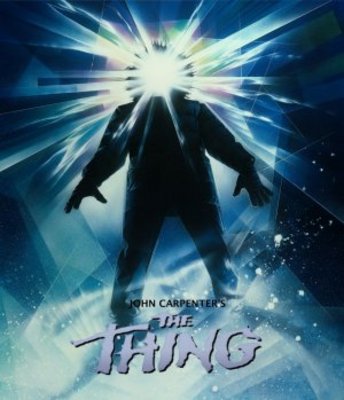
So, what about you? What are your description pet peeves?
by Mayumi-H | Jul 30, 2012 | Excerpts, Fearless, Process
A friend of mine asked to read my latest project, which happens to be Fearless. I don’t usually share my work with people I trust so early in the game, but I offered him the first two (draft) chapters, mostly just to shut him up.
It didn’t.
What I got back was an earful. He made some good points, but this had to be my favorite critique: The best friend is more likable than the hero. To quote: “Your hero’s a jerk.”
That one actually made me grin. Because yes, he is. But, that’s a big part of the story.
One of the things I love about my main characters is that they’re flawed. Some more than others, of course, but I try to help them all grow. That’s the beautiful thing about heroes and heroines. They’re like you and me (sometimes scarily so), but, over the course of the story, they push themselves to be better people. They don’t always get what they want, but they’re stronger men and women for the effort.
Which is why it’s so much fun to write them as jerks in the beginning:
Ross felt a grin creep to his face. Then he raised his free arm and called out, “Mornin’, Beth!”
Neville clicked his tongue, muttering, “Grow up.”
Ross ignored him, swinging his board up as he approached both fruit and filly. He bent his head, offering the Crispins’ youngest daughter a leering smile. “You look as scrumptious as those apples!” he told her.
Beth laughed and blushed bright red under her kerchief. “Thank you,” she said, her voice mostly squeal.
It took some effort for Ross to keep his smile in place; hopefully, that voice would one day mature as nicely as her tits had already done. Still, he wasn’t interested in her, just the apples, so he offered her a charming flare of his nostrils and asked, “Think you could let us have a taste?”
What do you like best about your main character(s)? Are they the ones who grow over the story, or do they spur the growth in others?
by Mayumi-H | Jul 28, 2012 | Process
With apologies to The Killers.
The history of human communication is an interesting one, from an anthropological perspective. The idea that people told each other stories – to stave off the demons in the dark (or to bring them to life), to explain their visions in the sky, to keep close the triumphs and tragedies of their brethren – has always been lovely to me. I think it’s one of the main reasons why I first tried putting pen to paper, to preserve the ideas in my head, to answer the questions I wanted answered: Who are we? Why do we do the things we do? What hopes exist for us, out there in the vast wilderness?

Photo by Keizers, via Wikimedia Commons
Stories aren’t just about creating characters or putting plots into motion. They’re ways to examine the world around us. Which is why it saddens me to think there are writers, directors, editors, artists out there worried only about the next big thing, ways to capitalize upon the latest trend. People unconcerned about the story,when it’s the story that moves people.
Katniss Everdeen isn’t just a kick-ass fighter; she’s got a story. Batman isn’t just a gritty super-detective; he’s got a story. Henry Jekyll, James T. Kirk, Frodo Baggins, Spike Spiegel: what makes these characters great – frightening, masterful, inspiring, entertaining – is not just what they are but the role they fulfill within the greater story. Without Primrose, who is Katniss? Without his rogues’ gallery, who is Batman? That’s what engages readers and followers: the story around those characters and their world.
I tell stories I want to tell. It’s one of the reasons I’m so horrible at collaboration, I suppose. But the storyteller needs to create worlds that interest him. She needs to (try to) answer those questions weighing on her mind. He needs to fall in love – at least a little bit – with his story. We can put the manuscripts away when they’re done, but I think we’ve got to pay attention to more than just the cookie cutter basics that have been made popular.
Do you agree? When it comes to your latest/current work, what is it about it that drives you to tell that story?
by Mayumi-H | Jul 16, 2012 | Excerpts, Fearless, Process
In photography and cinematography, forced perspective is a technique that uses optical illusion to make an object look closer/larger or farther away/smaller than it actually is.
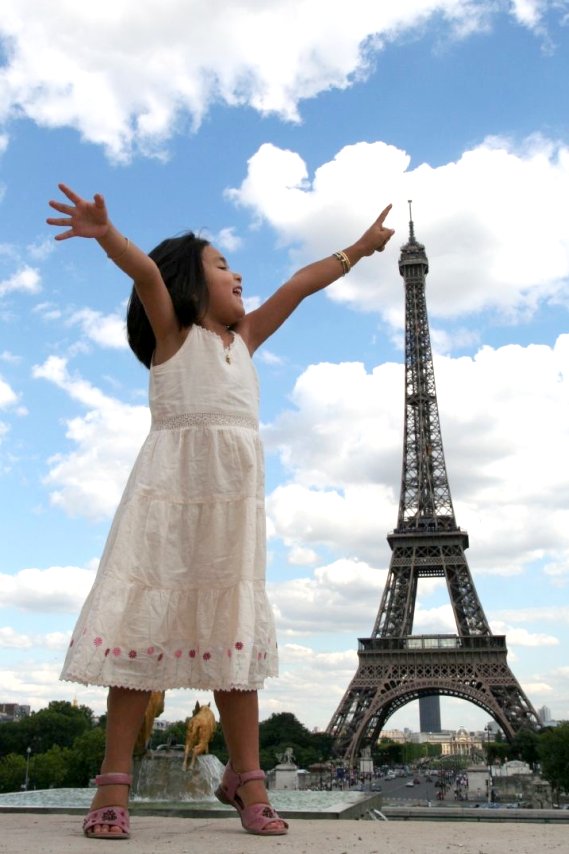
But this post is not about that sort of forced perspective.
I like to tell stories from a particular character’s viewpoint. I enjoy sticking with that one character through the chapter (or story), and relating his or her feelings to the reader through events, dialogue, and description. But everything that is seen, heard, or experienced in the story is how it relates to that particular character. An over-the-shoulder perspective, if you will.
I hate narratives that jump around from perspective to perspective – especially within a single chapter! – because it tends to leave me feeling like just an observer, and less invested in what’s happening to those characters. Some writers can get away with this multiple-perspective technique. It’s hard for me, though.
Get invested with your characters. Keep them close.
I like learning about a character through their triumphs and tragedies. Even though I know where that character will end up (usually), I love learning about him or her through telling their story. Perhaps it’s a crutch to fall into the same storytelling style for most of my work, but it’s also what I enjoy.
Here’s an example of what I mean:
She wasn’t the cool, salty sea that had filled his waking and dreaming senses from the moment of his birth, that much was true. She couldn’t slip frictionless through his fingers, or buoy him through careless mistakes that sent him tumbling from his board, or let him glide across her blue depths, like a bird skimming the tips of its wings through the froth.
But then, the sea didn’t warm him on chilled nights. It didn’t smell like jasmine or strawberries or mint, depending on its mood. It didn’t change its taste, either, from cool and creamy, to hot and bitter, and anything in between. And it couldn’t fill his arms, so soft and supple and warm, or cuddle him close in return. Amber was the only one who could do that.
Amber was the only one he wanted to do that.
I don’t think I could tell the same story I want to tell using a different narrative technique. Readers might want to know what’s going on in another character’s head, but I like keeping a bit of mystery. I go through my own life not knowing what other people think. Why not write stories the same way?
What’s your preferred storytelling perspective? Why?
by Mayumi-H | Jul 9, 2012 | Excerpts, Fearless, From Hell (A Love Story), Persona 4 Fan Fiction, Process
Warning: I’ve tried to keep it clean, but discussion of mature themes to follow.
“It’s been a while, hasn’t it?” Venus guessed. “Since you two have…been together?”
Ross paused, hand hovering over the electric kettle. “A bit,” he admitted.
She offered him a slow nod, glancing down at the edge of the counter space, where there was a stash of pens and a flip-pad scribbled with future meal notes. “Well, sex shouldn’t be the most important thing in a relationship.”
He shook his head as he filled the kettle with water. “I know that-”
“But it is important,” she said, and here Ross raised his head in quiet surprise.
I’ve never shied away from sexual situations in my stories. I don’t consider a sex scene in and of itself pornographic, though it can certainly be used for that purpose. In most of my stories (as in life), sex is a way for two people to communicate beyond the use of words; the intense intimacy forged by being sexual with another person creates all sorts of interesting conflicts and realizations.
Venus, here, is stating my own opinion: Sex should not be the most important aspect of a relationship. But it is important.

Sexual compatibility can mean different things for different people. A couple with low libidos may have sex once a month…and it will be wonderful every single time. A couple with strong libidos may have sex once a day…and that can be beautiful every single time, too. Relationships are as unique as the people in them, and it’s the part of stories I really enjoy examining.
I like a sex scene to mean something, though. A conflict of interests. A learning experience. A personal enlightenment. Even a casual or detached sex scene can have important meaning for a character, at that moment in the story. I like using all of these approaches to sex in my stories.
What I’ve been enjoying with this latest endeavor, though, is the fade-to-black, or glossing, technique. Sex for its own sake doesn’t do anything for a story; I’ve always agreed with that. But sex also doesn’t have to happen “on-screen” for it to be worthwhile to a character’s or relationship’s development.
For Fearless, let’s say there are four sex scenes that are important for the development of the plot. Does that mean the characters have sex only four times in the story? Hell, no! But, I can show in a paragraph – or a sentence – what’s happening between them, without going into detail. I know what’s going on; the reader knows what’s going on. And I can get to the really important part – the ramifications or repercussions of that sex scene – that much more quickly, than if I delved into the detail.
Some writers and readers don’t like sex in their stories. That’s fine. I do like sex, though, when it means something. Just like in real life.
How do you feel about sex in stories?

![By Thomas Tolkien (Flickr: Surfer girl (2 of 2)) [CC-BY-2.0 (http://creativecommons.org/licenses/by/2.0)], via Wikimedia Commons](http://mayumi.amorphous.press/wp-content/uploads/sites/4/2012/08/256px-surfer_girl_2_of_2.jpg "Surfer_girl_(2_of_2)")

![Brocken Inaglory [CC-BY-SA-3.0 (http://creativecommons.org/licenses/by-sa/3.0) or GFDL (http://www.gnu.org/copyleft/fdl.html)], via Wikimedia Commons](http://commons.wikimedia.org/wiki/File%3AFalling_surfer.jpg)


Recent Comments