
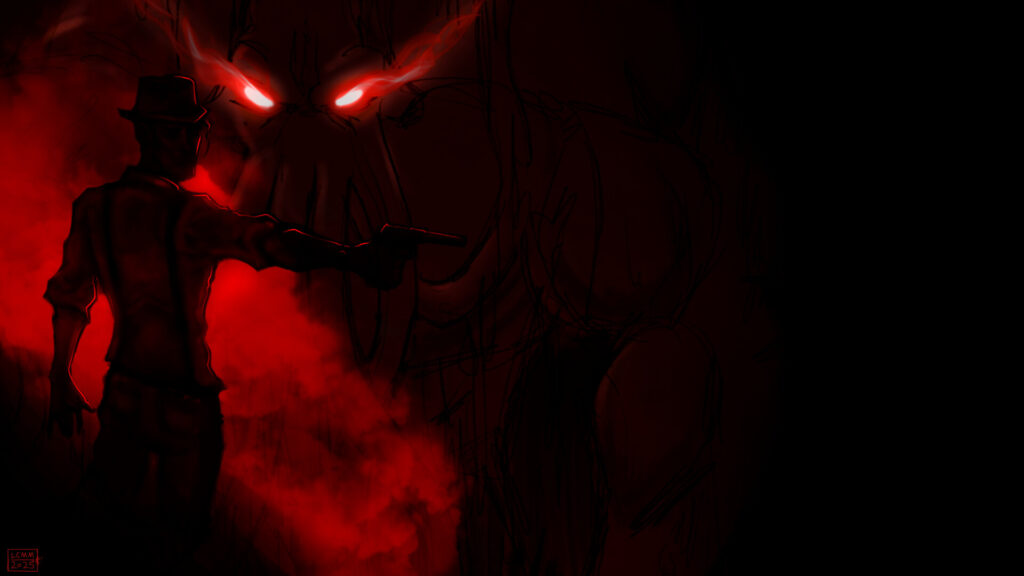
[Previously: Cairo]
AUGUST 1925: NAIROBI
One of my least favorite places in the world is a hospital bed, especially halfway around the globe from home. But beggars can’t be choosers, as the saying goes, and this beggar has some broken ribs that still need healing. At least the nurses here are pretty if stern, trained as they’ve been under the English colonial hospital system. One of them in particular, Inua, has been a real angel of mercy who brightens my day whenever I can wheel myself out to the courtyard attached to Nairobi’s Native Civil Hospital.
But I’m getting ahead of myself. An attentive beauty in a tight-fitting nurse’s uniform will do that to a man.
We’d left Cairo in a hurry, but not before Carlton Ramsey alerted us to the finding of some more of Elias’s notes on the Carlyle Expedition. They referenced Mount Satima, in Kenya, which Elias had visited. Since we were still in Africa, it seemed worthwhile to make a short detour south. Ramsey said he’d courier the documents to us with a latecomer to our party, a burly New Englander who went by the name of Bob. Bob was already known to my comrades. They knew Bob from a previous excursion and endorsed him as trustworthy, which was enough for me to accept him at face value. Bob met us in Mombasa, where we boarded a train bound for Nairobi, August 12, 1925.
Uganda Railway’s steam engine ride was a bumpy one with lots of interruptions, but at least Ramsey had booked us in first class, close to the engine. While Doctor Frome, Neptune Lewis, and Sally St. Claire (which was what Molly was calling herself now) caught up with Bob, I caught up on some sleep. That was bumpy, too, with lots of interruptions, as the details from Elias’s extended notes swirled in my head.
Elias had become convinced that the official accounts of the Carlyle Expedition Massacre – the reports that said Carlyle and his companions had been killed by the Nandi tribespeople who acted as their porters – were fabricated. Elias had notes from various locals, police, reporters, and even mercenaries, all of them giving accounts that Carlyle and his entourage had shown up in Kenya after their supposed death at Ndovu. I remembered Nuri’s story of the expedition team disappearing at the Bent Pyramid in Cairo and then returning somehow changed.
I’d felt changed after being inside the Bent Pyramid, too.
Elias visited Ndovu, the site of the so-called massacre, and while he didn’t find Carlyle or any of the other expedition members, he did write that the ground there was “corrupt.” His words, not mine. The place was completely barren. The locals avoid it, believing it’s cursed by the God of the Black Wind who shares the name with the nearby mountain, the top of which locals call his (its?) home.
One of Elias’s contacts, a Lt. Selkirk, was the man who’d actually found the remains of the expedition at Mount Satima. Selkirk said that the bodies, though left for days in the scorching Kenyan sun, hadn’t decayed. They’d also appeared torn apart, as if by some wild animal, though Selkirk couldn’t name any animal that would so systematically dismember so many people and then leave the remains uneaten. Most importantly, he didn’t find any white bodies, only those of the Nandi tribespeople. So much for the idea that the expedition had been slaughtered along with the natives.
Another Kenyan contact, Johnstone Kenyatta, suggests that the killings have been perpetrated by the Cult of the Bloody Tongue, whom we’d met ourselves back in New York. According to Kenyatta, the Bloody Tongue works out of the mountains. (Is he talking about Mount Satima, a.k.a., the Mountain of the Black Wind? Is cults working together a thing we need to be worried about?) He describes creatures – again, his word, not mine – flying down from the mountains and carrying off tribal children who are never seen or heard from again. Kenyatta also emphatically says that the Cult of the Bloody Tongue is “not of Africa,” nor is the God of the Black Wind.
A third contact listed in Elias’s notes is a mercenary, Nails Nelson. Nails didn’t talk about the massacre, except to say that he’d seen Jack Brady, part of the expedition, alive and at the Yellow Lily Bar in Shanghai, three years after he was supposedly killed in Kenya. Brady was pensive, according to Nelson, but Nelson didn’t press him. Elias can’t corroborate that, but I guess Nelson was convincing enough.
Getting back to the train ride, I started to smell smoke. Bob and Molly- I mean, Sally – headed toward the engine, while the doc and I tried to figure out where the smoke was coming from. On the left side of the train, I saw scorch marks. Something bright and fast kept flitting in and out of my peripheral vision. Then we heard the screaming.
It came from the cars to the rear. The door to those cars was locked. I grabbed my shotgun and headed forward, to find the man with the lockpicks.
Neptune was already in the engineer’s car. The engineer was dead, slumped in a corner in an unresponsive heap. I don’t know how to drive a steam engine, but I started pulling on levers in the hope that one of them would brake the train so we could help the people in the rear cars and possibly get some assistance from any locals nearby.
When I say I don’t know how to drive a steam engine, I mean that I don’t know its controls. I do know that a steam engine runs on steam, and throwing water on the existing coals will only make the engine work harder and the train go faster. That’s what Neptune did, though, causing the train to lurch in a sudden jump of speed. At least he didn’t scald himself in the process.
Maybe Bob could drive a train. I went outside to get him. The wind was vicious out here, and out of the corner of my eye, I caught another brilliant, dashing flash. This time, the flash flew upward, sparking more fires along the way.
“Turn ahead,” Molly/Sally called out to me over the wind.
“We can’t stop!” I shouted back.
She looked down at the space between cars, and the pin holding the rest of the train to the billowing engine.
Bob wasn’t with her. The only place he could have gone was the top of the train. I grabbed the ladder and hauled myself up. Just before I cleared the top, something hit a large rock to one side of the train. I hoped it wasn’t Bob and cried out just in case:
“We’re uncoupling the engine!”
I knew Molly wouldn’t wait, so I jumped off the ladder back to our first-class car. The doc and Neptune were already there. Through the open door between cars, I saw Molly take a long drag of her cigarette and yank the pin. Bob came flying through the door right after, skidding lightly on his feet before turning about into a waiting seat.
“Whew,” was all he said.
Without its engine, the train slowed to a stop. The passengers in the rear cars had contained their fires and were dealing with injuries. Doc Frome, citing her oath to “Do no harm,” paused to help, while the rest of us assembled our collective belongings. We were footing it to Nairobi from here.
Thankfully, it was only a few miles to the city. There, a tall African man in a crisp suit was waiting for us. He informed us that Carlton Ramsey had alerted us to our arrival and introduced himself as Johnstone Kenyatta, the very same whom Elias had interviewed.
Kenyatta ushered us into his car – an enviable yellow Rolls Royce that he called Betty – to take us to some lodgings. On the way, we noticed a growing group of individuals clad in red robes walking the streets. Kenyatta said they were members of the Cult of the Bloody Tongue. Right there in town! They were gathering for a pilgrimage to nearby Mount Satima, or the Mountain of the Black Wind, the supposed site of the Carlyle massacre.
Like Elias, Kenyatta didn’t believe the official reports. He said the Bloody Tongue cultists had been amassing for the last few weeks, in preparation of a ritual that he’d overheard them call The Birth. That didn’t sound good. Apparently, this ritual was set to take place two days hence. I guess I’m glad I suggested we get on the train to Nairobi when we did. The alternative was something I didn’t want to consider, even now, sitting in a wheelchair with my ribs taped up.
Kenyatta dropped us off at an inn and said he’d meet us there later. In the meantime, he told us: “Speak with no one. Make no friends in town.”
Naturally, after we’d cleaned up, we had a chat with the innkeeper and his wife. The innkeeper told a similar story to Besart’s, back in Cairo, that the Carlyle expedition had traveled out to Mount Satima and then returned, amid stories of a great bloodbath having taken place while they were out there. Carlyle, he said, was passionate with a stunning African woman, and with them was a young white woman who was pregnant.
From Elias’s notes, we gathered that the Negress was probably M’Weru, and that the young white woman was likely Hypatia Masters, both part of the Carlyle expedition who, like every other member of that party, was supposed to have died almost six years ago.
When Kenyatta rejoined us, he offered to take us to see Bundari, an old witch doctor who lived in a small village on the way to Mount Satima and whom Elias had wanted to speak with but never got the chance.
I made sure the shotgun came with me.
At Bundari’s meager village hut, we met Sam Mariga, his translator, and Okomu, his attendant. Bundari himself was an old, fragile man who seemed to be in some kind of deep sleep when we arrived. Our talking didn’t wake him, but after about five minutes, he came around on his own. It was strange; his body had looked so frail and skinny while he slept, but upon waking, he seemed to regain some mass. He still didn’t speak English, but Sam translated for us:
“The Eye of Light and Darkness can contain the mountain god.”
Molly (or maybe it was the doc; I was trying to keep watch) brought up the sigil we’d seen on the top of the Bent Pyramid. When we drew it for him, Bundari seemed to recognize it, and confirmed that that was, indeed, the Eye of Light and Darkness.
Even if we had brought our half of the stone, the other one had been smashed. Was that Carlyle’s doing? Or some other member of the expedition? When we mentioned that, Bundari had an odd answer. He would speak with someone named Hassan, though it would take time. He entered another deep trance-like state, during which Okomu went back to massaging his limbs, and Molly took it upon herself to make everyone some tea.
After several hours, Bundari returned to consciousness. He told us, through Sam, that Hassan said we could reconstruct the Eye of Light and Darkness, to stop something called Nyarlathotep.
That was the name I’d heard in the Bent Pyramid, back in Egypt. It made my skin itch then and it did the same now.
Bundari offered no guidance on how we could reconstruct the Eye of Light and Darkness. We’d need to learn that from Hassan. Who was, by the way, in Shanghai.
In the meantime, the Cult of the Bloody Tongue continued to amass near Mount Satima, and our time to stop their Birth ritual was running out. Kenyatta refused to go with us. Same for Bundari. They were simple people, they said, unable to stand up to the savagery of the Cult of the Bloody Tongue and God of the Black Wind. But as Bundari told us, “The mountain calls you.”
Perhaps in some acknowledgement of our fate, he offered us two gifts. Molly, whom Okomu addressed on behalf of Bundari as “Moira” for some reason, received a narrow fly whisk with some cryptic words about it protecting her from more than flies. And to Neptune Bundari gave a wicker cage that held a strange-looking insect/lizard thing. Neptune, of course, was instantly intrigued. “She who is not who she seems,” Bundari called her. Neptune named her Betty Too.
We haggled ourselves a truck and some munitions and started off toward Mount Satima. As we rode, we saw more and more red-robed cultists going the same way. By our rough calculations, almost a thousand of them. We’d fought Bloody Tongue thugs before, but those numbers weren’t realistic. We’d need to blend in.
One by one, Bob ambushed four lone traveling cultists to get us some robes. The fifth put up a minor fight but went down like the others. From him, Bob also plucked a poison dagger.
We didn’t kill them, though I’m sure the fifth one had a shattered jaw and wouldn’t be back to his old self any time soon.
“At least the robes are blood red,” Bob reasoned. Personally, I didn’t think we needed to justify dispatching any of these Bloody Tongue so-and-sos. They’d already done enough damage.
We left the truck and headed toward the mountain. As we got closer, we could hear the chanting that typically accompanied cultist gatherings like this. Bob had the poison dagger, Molly had a dagger, a revolver, and the fly whisk, Neptune had his flashlights and Betty Too, and I had my shotgun. The doc carried her medical bag with her. Under ordinary circumstances, we might have seemed conspicuous, but the night was full of pockets of cultists screaming in ecstasy as they tortured villagers with clubs, flails, lashes, and fire. Every fifteen minutes or so, a new line of prisoners walked down from the top of the mountain, fresh meat for the fevered cultists. There was something else at the top of the mountain, too, visible even from our distance: a statuesque Negress called out words we didn’t understand while beside her wobbled another figure who carried from its hips what could have been three truck tires…but very probably weren’t. The cultists whipped themselves into a greater frenzy when they appeared and kept going in their madness when the two figures disappeared again into the mountain.
Our circumstances weren’t going to get better.
We threaded our way through the crowd of orgiastic cultists, who thankfully paid us no heed. We got to the path and started up the mountain. With each yard we traipsed, the chanting and screaming from below became fainter. They were replaced by the shrieking of the wind, which threatened to blow us from the path the higher up we went. We made it, though, arriving at a massive doorway through which the woman and her companion must have traveled, deeper into the mountain.
We went through the same.
The mountain interior was a maze of paths. In one, Bob found a marine chronometer, like the one Neptune had smashed in London. Like London, though, we weren’t on a ship. So, what the heck was a marine chronometer doing here? And why were the numbers 011426 scratched on the back? Was it for January 14, 1926? That was five months away. In the meanwhile, we had more pressing concerns.
We came upon an inner chamber full of more cultists. There was a platform near the back where the elegant African woman stood next to the other figure, which we could see now was a young white woman. Her lower body wasn’t merely distended or bulbous. It was as if she carried an enormous pulsing egg sac on her hips…except that the pulsing sac was part of her, dragging down the rest of her skin so that she could barely move on the platform. It was Hypatia Masters, and M’Weru tended to her as a kind of midwife. We’d walked into the Birth ritual that the Cult of the Bloody Tongue had assembled for.
Clad in our red robe disguises, we moved toward the platform. Bob had his dagger out; Molly did, too. I put the shotgun in its sling and grabbed one of the flaming torches instead. I didn’t like these cultists, wouldn’t have minded seeing them all get dragged down to hell, but shooting a twelve-gauge in a crowded room with four friends spreading out toward the platform was bound to get complicated.
Bob jumped to the platform first. He went for Masters. M’Weru tried to claw him, but Molly stopped her with a dagger to the lung. The way she tells it, that stab kept M’Weru from using her voice, which no doubt she’d have spent on a curse. On the other side, Bob plunged his own dagger into the mass of Masters’s belly, tearing it open to let spill a monstrosity resembling a massive insect larva. I’m actually glad I didn’t see that, busy as I was trying to keep the alerted cultists from rushing the platform. Swinging my torch had been the better idea, or so I thought until two cultists pummeled me with their clubs. It was at that point I wished I had just kept out the shotgun and started blasting.
I thought my luck had finally run out, when I noticed Neptune opening Betty Too’s cage. The tiny creature stepped from the confines of her pen and immediately started to grow and…change. Her limbs stretched long, with claws on the ends of her four arms. She stood at least fifteen feet tall on her taloned toes. Her head became enormous, a vertical mouth ringed by giant teeth. She picked up a red-robed cultist in one hand and raised the man to her mouth, which took off his head with one easy chomp. She let the rest of the body fall into her mouth and swallowed. Then she grabbed another cultist.
We got out of our red robes quick. Betty Too went on with her massacre, leaving us behind.
The screaming went on a long time.
We staggered down from the mountain. There was no one left alive around us. Betty Too was gone, as well. Somehow, we made it back to the truck and returned to Nairobi.
You never appreciate how much you breathe until it hurts to do it. I was too broken to travel, so Johnstone Kenyatta got me admitted to the Native Civil Hospital. When the doctors asked me how I’d gotten my injuries, I told them I’d seen a man attacking a pregnant white woman and I tried to help. I didn’t mention that I was trying to help the man attacking the pregnant woman, or that the pregnant woman was part of a Cult of the Bloody Tongue ritual. Luckily, they didn’t ask.
I don’t enjoy being in hospital. But it’s better than the alternative.
Over the last few days, I’ve been able to come out to the courtyard, to listen to the nurses gossip and smoke as the sun passes overhead. Out here, the world seems almost normal. When there’s nothing to watch, I try to remember all the details of that night on the mountain. I’m sure there are bits I’ve forgotten, or that my mind simply doesn’t want to recall.
The others, I’m told, are shaken but relatively all right. Once I’m back on my feet, we’ll need to head out again. To Shanghai, I suppose, to look for Jack Brady. Or maybe some other place where Elias’s notes will direct us. At this point, it feels like cultists and nightmare monsters are inescapable, no matter where we go.
I guess we won’t see Betty Too again.
I wonder who’s got my shotgun.
Recent Comments