by Mayumi-H | May 26, 2012 | Process
For four solid years at university (okay, three-and-a-half; I had a lot of Advanced Placement credits), I studied the art of understanding and writing the English language. I love reading, and I love writing. And I take a lot of pride in my knowledge of both.
But is that a good thing?
English major; writer; theatre tech: You name it, I nerded it.
(Panda necklace available from http://www.etsy.com/shop/panduhmonium)
I’ve read publishers and professionals who say that a good editor will take care of any grammar or punctuation issues you may have, and that you – the storyteller – should concentrate on all of the things that will make your story sell: plot, characters, conflict, dynamics. That’s great to hear, especially for those writers who have more skill with story than they do with pesky matters like proper capitalization and use of commas or quotation marks.
But I’m the type of person who lives and breathes that stuff. Before I send any manuscript off to a beta reader or an editor, I want it to already look its best. I want to be proud of it. If I send off a manuscript that is half-assed in its grammar or spelling, that’s going to make me look like an idiot to my editor. At least, I think so.

Idiot: when Captain Picard can’t even look at you.
I know that any editor is going to return my manuscript with lots of notes and corrections; I’m preparing myself for an ocean of red mark-ups. But I think I’m doing that poor person a favor by at least making the manuscript as clean as it can be, the first time around.
For all of you experienced writers out there: Am I worrying too much about the rules of my language? Should I leave all of that to the beta readers and editors? Or am I right to be muscling up on my words and punctuation as well as my plots and characters?
by Mayumi-H | May 26, 2012 | Process
I’m a fan of DVD extra features, but this one kind of blew my mind.
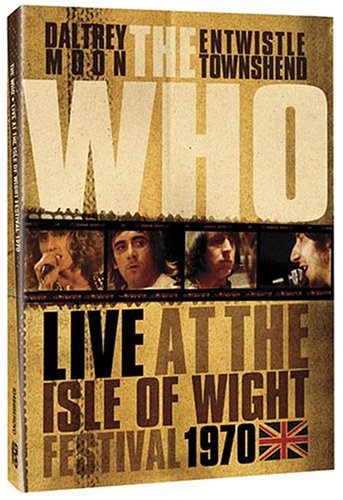
Come for the music. Stay for the insight.
I’ve always enjoyed the music and songs of The Who, and that has a lot to do with Pete Townshend’s storytelling. Yes, that’s right: the lyricist as a storyteller, just like a novelist or poet (or any of the fancy-schmancy names we dream up for ourselves as people who just want to tell stories).
Watch the Isle of Wight Festival concert footage, because it’s amazing to see an honest-to-God rock band in their prime kicking out hit after hit for the better part of 100 minutes. But then click on over to the Special Features, and watch the interview with Townshend. About 2/3 of the way through, he describes the difference between an Artist and a Craftsperson.
The Artist, he says, tells a story from inside, a story made for the Artist, first. The Craftsperson, on the other hand, tells a story to meet demand, a story made for selling. He likens a Craftsperson to a Hollywood screenwriter, who can churn out blockbuster hits, what audiences and studios want. An Artist, meanwhile, can’t do that; an Artist is too engaged with his own story to let it be compromised by anyone else.
There is nothing wrong with being either an Artist or a Craftsperson, in my opinion. (Townshend seems to agree; he says with some admiration about the Hollywood blockbuster writer, “I don’t know how they do it.”) And, I think that a storyteller can be both, at the same time. But one side will have dominance over the other.
I don’t know whether I can call myself an Artist. I definitely prefer to tell stories that are personal to me, though. And I admire real Craftspeople, who can sacrifice parts of their stories to give them more mass appeal, to succeed with a wider audience. I think that’s necessary, if a storyteller wants to be monetarily successful. But there’s a part of me that considers it a Faustian bargain, too: What part of my soul will I have to give up, to give my stories the success I think they deserve?

“Just sign on the line, Miss….”
Not having reached that point of decision-making, yet, I can’t say for certain my answer.
I’m willing to edit my stories, if I think they’re worthy of the effort (some aren’t). But I don’t know if I could, say, change an ending to make the story more widely accessible, or change a character’s sexual orientation to appeal to a different audience. I think I’d rather just print up the story on my printer, in that case, make myself a personal cover, and call it a day.
What do you think? Are you an Artist or a Craftsperson? Both, or neither?
by Mayumi-H | May 21, 2012 | Excerpts, Fearless, Process
I came across this writing meme a while ago, but only recently did it come back to me.
The rules are:
Go to page 7 or 77 in your work-in-progress.
Go to line 7.
Copy the next 7 lines (or 7 sentences), and paste them into your blog. (No cheating!)
Tag 7 authors to do the same.
Now, I don’t particularly care to get tagged in these things, so I didn’t do the last step. But I did like this idea, especially since the way this worked out, it highlights a piece of the story and character/romantic development that comes back into play later in the story (and which I recently felt the need to rewrite).
So, here’s my 7 lines from page 77:
But Amber just stepped over to him and lifted the book from his hands.
“That’s all right,” she said, as she sat down beside him. She flipped open to what seemed a random page, but the way she touched her fingers to the picture of a pretty princess laid out upon a bed of spiralling thorns told him differently.
“This one’s my favourite,” she said. “Brier-Rose.” She looked up from the pages and faced him with a tiny smile. “Sleeping Beauty.”
He smiled back, easing close to her on one arm. “You are quite the romantic,” he said.
She shrugged. “Faery tales are simple. The villain is always defeated; the hero always wins. The princess always finds true love.” She paused, her gaze falling once more to the half-coloured illustration beneath her fingertips. “And the father never forgets his children.”

Prince Florimund finds the Sleeping Beauty [Public domain image via Project Gutenberg]
Ross is right: Amber’s an incurable romantic. But I really like the way that she’s telling him a lot, here, even though she’s not spelling things out for him. That’s the way I like to tell stories, too: letting the reader decide how dialogue, action, or interactions can be interpreted beyond a surface level.
This excerpt happens all the way back in Chapter 5 (which feels like a lifetime of writing ago, though really just November 2011)…but it has repercussions throughout the rest of the story.
If you decide to participate in the Lucky 7 Writing Meme, let me know in the comments. I’ll happily link over to you!
by Mayumi-H | May 19, 2012 | Process, Uncategorized
Just like with any skill, editing takes practice.
The first words from my pen tend to paint detailed pictures, which can sometimes be nice to read…but it does nothing for the story. It’s just a lot of background filler that takes up space, and unnecessarily so.
Writing challenges that require me to stay to a low wordcount have made me think about the use of my words, and how to give them more impact, since I have to do more with less. Now, I’m not as good as some people out there (and I still enjoy creating a well-imagined world), but I think I’m starting to get the hang of this.

Here’s a little science fiction piece I wrote a while ago, about a group of stowaways.
Take one, 521 words:
Lelie curled her fingers around the edge of the cargo hold door and gently swung it open.
“What do you see?” Tyc whispered from behind her.
Lelie craned her head around and shushed him. As she turned back to the hold, she held her breath.
It was a wide, open room, about as big as the old galley at the Institute. Metal hold containers lined all four walls, and with the exception of a few emergency lights along the stairs and floor, the hold was completely dark, a thankful allowance given their predicament.
She crept out of the container and, with one finger pressed to her lips to remind them to be quiet, she beckoned her companions forward.
Short, compact Tyc came out first, peering around from behind those over-sized goggles that helped pilots focus in Darkspace. The eyewear was usually connected to a navigation computer, projecting a heads-up display of vehicle location and statistics to the wearer, but without a precious computer (or ship, for that matter), the goggles were essentially just a trapping. Tyc still wore them, though. Bred as a long-haul pilot, he would have felt naked without them.
Lithe Imien was next, her fingers stretched out before her, the subtle electro-receptors along her skin glowing faintly in the dim light. She stepped lightly, her bare feet noiseless against the metal floor. She cocked her head to the side. “I can feel the engine – it’s about two levels below us. I’ll need a map for anything more.” She turned to Lelie and blinked, uselessly. The cipher had been blind since birth: all the better to open her peripheral senses to the programming of being a sensitive.
Stoll was last from the container, cracking his neck as he stood to his full height. Bio-engineered to be a soldier, he was both tallest and broadest among them. Even at the end of adolescence, he was all sinewy muscle, without hint of the age or paunch of the guards at the Institute. He was also the most capable in a fight, should things come to that.
“Just find me a gun,” he muttered to Imien.
Lelie shook her head. “No. No guns.” She took a step toward Stoll. “You promised.”
Stoll leaned toward her, dropping his voice further. “Lel, I can’t protect us without something to use as a weapon.”
“No guns,” Lelie repeated, emphatic. She raised both of her smooth, slender hands in a warding-off gesture. She straightened. She was not as tall as he was, but she had presence; all concubines did. “I want to be a Substantive as much as you do,” she murmured. “But the only thing guns will get us is killed.” She looked beneath the dark hair in front of his eyes. “I didn’t risk everything to get out of the Institute just to be shot on a nameless cargo freighter, did you?”
Stoll glanced away, unable or unwilling to hold her gaze. He might have been able to snap her neck with a single quick motion, but there were still some ways that she was stronger than him, and they both knew it.
“Well,” he said. “We can’t stay here.”
It’s all right. I mean, I don’t think it’s utter dreck; there are a few little nice bits in there that could be fleshed out to create something pretty cool. But it plods, and doesn’t go anywhere, quickly or slowly.
Now, here’s take two (365 words).
The ship was quiet. Save for the skeleton shift on the bridge, there was no movement, no talk, no breath.
Or, there shouldn’t have been.
In the hold below decks, close to the engine, one cargo container creaked, shifted, and then burst open, its door clattering to the metal floor.
“Quiet!” Lelia hissed as she crept from the container, pressing a finger to her lips.
Short, compact Tyc was first behind her. “Doesn’t matter,” he muttered. “We’ve already shifted into Darkspace.”
Lelia looked at him. “How can you tell?”
He peered up at her from behind his oversized pilot’s goggles, his snub nose curling in something like disdain. “Can’t you feel it?”
“He’s right,” Imien said, as she stepped from the container, too, her fingers outstretched before her. The electro-receptors along her skin glowed, like the lines of emergency lighting beneath their feet. “Engines are running hot.” She turned hear head toward Lelia, too, and blinked, uselessly. “Is there a comm panel nearby?” she asked. “It should have a map I can download.”
Stoll was last from the container, and he cracked his neck as he stood to his full height. “Just find me the armory,” he said. A rotation of shoulders made another cracking sound. “I need a gun.”
Lelia shook her head. “No!” she said. “No guns. You promised.”
Stoll leaned toward her, dropping his voice. “Lel, I can’t protect us without a weapon-”
“No guns,” Lelia repeated. She wasn’t nearly as broad as he was, nor even as tall, but she had presence; all of her kind did.
She laid her hands on his chest, looking at him but speaking to all of them. “The only thing guns will get us is killed,” she said. “I didn’t risk everything to get away from the Institute just to get shot on a cargo freighter. Did you?”
There was no answer from Tyc, or from Imien; both of them knew better than to get between the paramour and soldier.
At last, Stoll glanced away. He could snap her neck in an instant…but she was still right, and he knew it.
“Well,” he rumbled as he pushed past her. “We can’t stay here.”
You see what I’m saying? I tell the same moment, with the same pertinent details, but taking out all of that useless explanation makes the whole thing move at a quicker pace. Not fast, yet, but quicker. (It still needs a lot of work.) Nonetheless, it’s a good exercise, to learn what you can cut and still get your story across.
What lessons have you learned from editing your own work?
by Mayumi-H | May 12, 2012 | Process
I was going to spend this entry talking a little bit about self-edits, but I’ll save that for another time.
Instead, I thought I’d share a link to this post from over at The Red Pen of Doom, wherein Mr. Guy takes his titular pen to my entry to Ms. Joey’s Spring Into Action Flash Fiction contest from a few weeks back. Go take a look, and learn from his edits and comments. Don’t worry; it’s totally safe (Ms. Joey made us keep things PG).
Pretty darn slick, huh?
Now, if you’re like me, you probably get very nervous when you post anything original, because you’re putting yourself out there for anyone to mock. But, in this case, I remembered that one of the main points of my current novel project is overcoming fear, so I made myself submit that flash fiction piece.

“Aaah! What have I done?!”
The result? I had a lot of fun stretching writing muscles I hadn’t exercised in a while (namely, writing adventure). Even better, though: now, not only do I feel very honored to be made an example of by Mr. Guy, but I think I have a better idea of how to write that potential story!
The moral of this very short anecdote is, don’t be afraid to put yourself out there. Even if it’s just something small. You never know who might be reading.
Remember, it’s up to you to beat down those trolls who tell you you can’t do it!
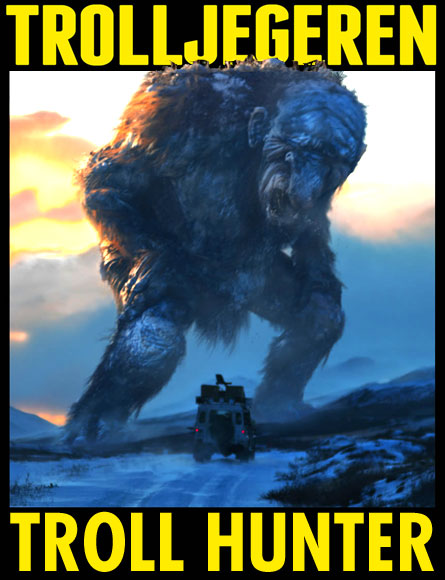
Trollhunter. Find him. Watch him. Learn from him.

Recent Comments