Select Page

Who decides a happy ending?

I’ve been told that one of the qualifying rules of a good romance is that it has to have a happy ending, where the hero (or heroine) gets the guy/girl (or whatever couples permutation the romance takes) in the end. But who decides what makes an ending happy or not?

I enjoy a fine romance, myself. Or, at least, I enjoy examining the relationships that exist between people, whether they be family, friends, or lovers. (Enemies count here, too, I suppose, but they don’t exactly fit into my topic of romantic relationships.) Just as relationships come in many forms, though, so, too, does what constitutes the “happy ending.”

Disney-fied romances tend to happy-end with the heroine (it’s usually the heroine on the quest) marrying the hero, the man of her dreams. Tragic romances, of course, end with the hero and heroine falling in love but then losing each other in some way, usually death. (Here it could be said that death ends all love affairs, whether successful or not, but that’s a topic for another day.) For my own tastes, I like seeing the hero and heroine finding happiness…but what brings happiness to one couple might be very different for another.

Ross, the hero of my (first? real?) novel, Fearless, starts out a rather typical self-centered young man, who finds himself falling completely in love with a girl, for whom he’d overcome damn near anything. (And he’s got to overcome a lot, over the course of the story. But then, that’s where the title comes in.) But sometimes the happy ending for which many of us long just…isn’t what’s meant to be. Life gets in the way; events interrupt. And people change. A hero should change for the better, through his story, and whatever his quest may be: a challenge from the heavens, a challenge from a rival, a challenge from without or even within. But even a changed hero sometimes just doesn’t fit into the stereotypical happy ending.

For the characters in this book, being fearless is about more than just facing up to the challenges that block your path to the happiness you seek. It’s also about letting go, even when it hurts you more than anything.

100 Word Challenge: Everyone Loves Neville

100 Word Challenge for Grown-UpsJulia’s Place has a 100-Word Challenge going. These are always fun opportunities to write, especially for someone like me, who has a tendency to be verbose.

This week’s challenge theme is “The Flip Side.” Here’s my entry:

One of his students, a girl, lingers at his side, batting her lashes. “Thanks for the lesson, Neville.” She sucks a breath that makes her chest puff. “If there’s ever anything I can do…?”

“Just practise,” Neville says, before sending her on her way.

Beside him, Ross watches the girl go, too. “How do you do it, mate?” he asks. “Everyone loves you!”

Neville turns and looks at him, his friend with the luscious smile and the eyes so deep and blue he thinks he could drown in them. Then, he sniffs. “Not everyone.”

This little support piece for Fearless has been bouncing around in my head since I started the story’s initial plotting, back in October 2011. You can be the judge if it adheres properly to the “Flip Side” theme. (Hint: It’s not so hard to see.)

Hope you enjoyed it!

Excerpt: Fearless, Chapter 5 (draft)

All heroes must remain fearless, yes?

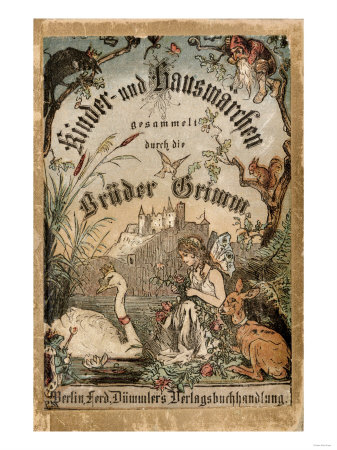
Grimm, 1865 Edition, Cover image

Kinder-und Hausmarchen, 1865 edition.
Image courtesy squidoo.com

Ross nodded, his eyes lingering on her as she padded into the bathroom. Shortly, he heard the sound of shower curtain rings being pulled along a bar, and then the staccato patter of water, and then he turned his attention to the low bookcase beside the chest of drawers, in an effort to distract himself from the thought of Amber naked and wet no more than a section of hallway away.

A closer perusal of the book titles stacked side to side on the shelves didn’t give him any greater insight into the girl who’d placed them there…until he noticed one book – a tall, thick, weathered hardback – that was more worn and more beaten than any of the others, and significantly so. He wasn’t much surprised to realise that it was a book of faery tales (it wasn’t readily evident what “Märchen” meant, but “Grimm” was easy enough for him to recognise). Pulling it from the shelf, he opened it onto one supporting forearm with a creak of stiff binding.

The stories were written in the original German, which – with the exception of a few very simple words (yes, no, sorry) – he couldn’t read, but many of the crudely-coloured pictures were familiar from the bedtime stories from his youth. He wondered a bit absently why this particular book was so much more tattered than the rest; even the most misshapen paperbacks were in better condition than this old tome. And then, while flipping through the pages from back to front, a very familiar word written in black script on the inside front cover caught his eye, and he paused.

For Amber, my darling princess, the message read, and Ross paused, as he felt a sharp if short twinge of jealousy that made him frown. Was there some other bloke, then, for whom she longed more than any other, and for whom he’d now have to silently compete for her attention and affection, just like he’d done with so many other women over the years?

The inscription went on:

You are a more valuable treasure than any of prince or devil. Be brave, even in the darkest forests. With more love than you know, Your Father.

Sitting there on the bed, with the book laid open across his arm, Ross paused again, feeling abruptly stupid for his jealousy. Because of course such a gift from her father would be so tattered and used. He understood well the quiet desperation of a man- or woman-child trying to hold on to something so cherished lost; he’d spent a long time of his youth trying to be like his own father for that reason, like the good-natured husband and all-knowing dad that James Finch had been. But even the years at Torpoint and keeping a lifeboat rescue pager in his pocket wouldn’t bring back a dead man, any more than Amber’s wear and tear of a precious gift of a storybook would make her own father come home.

Staring at the written words on the inside cover for what seemed like a long time, Ross felt both privileged and despicable to have been given this glance into Amber’s secret innocence.

I guess some folks would consider this a lot of pointless detail into the past personal life of a character, but I enjoy these glimpses. I think that people are just as much products of their pasts as they are of the events that happen to them in the present.

Excerpt: Fearless, Chapter 4 (draft)

This was the first real romantic scene I got to write for Ross and Amber.

I’ve always written right from my brain (especially for NaNoWriMo!), and I tend to get long-winded about romance passages in particular. But, you know what? Even though I’ll likely have to cut a lot of this when an editor gets their hands on it, I still really enjoy it. I like the ebb and flow of run-on sentences that evoke that tumbling feeling that we get when we’re falling in love, whether for the first time or the fifteenth.

The large grassy precipice of Crow’s Point was empty, an unbroken expanse of green grass that stretched toward the sea on one side, toward the village on another, and on the third back toward the path and road they’d just walked. There was no artificial illumination up here, and the lights from the village shopfronts and homes weren’t enough to create more than a quaint tableau that looked like a model train set far below. But the stars overhead were bright, blinking and twinkling and shining without competition, and they cast enough light for them to see where their steps flattened the thick grass, and more than enough light for Ross to watch how Amber’s face beamed as she took in the view.

She looked out toward the horizon first, then turned her head slowly in the direction of the village, for a long minute just blinking. Then she smiled, and clasped at his hand, which she hadn’t yet let go. Finally, she whispered, “It’s all so beautiful,” in a voice so hushed that he almost might not have known she’d spoken at all, except that he found it very difficult to tear his eyes away from her lips and the way that they glistened in the starlight as she smiled and spoke.

It certainly is,” he said, still watching her.

She turned to him now, and abruptly giggled. “You’re not even looking!” she mock-scolded.

I am so!” he told her with a chuckle. But then he quickly quieted, shifting on his feet so that he was facing her, and reached out with his free hand to caress the round part of her jaw. “I’m looking at you,” he told her softly. Then he bent his head down to hers, lifting her face at the same time (or maybe she did that; he couldn’t quite tell). And in the warm space between where they stood, their lips met each other halfway, clutching in one soundless kiss, then another, and still yet another.

Ross let go of her hand at last, trading her fingers for the gentle curve of the small of her back; he felt both of her arms wind their way around his shoulders, and she pressed up into his embrace, humming faintly into his mouth. There was no swaying or shuffling, just the soft, sweet-smelling squeeze of her body against his as their lips and tongues danced a delightful give and take of blooming desire.

He pulled her closer then, and she gave another sighing breath against his lips as he sank slowly to his knees. The lush grass was as soft a bed as any, and so he lowered her to its springy top, never once breaking from their kiss.

He stretched out on top of her, moving very gently with his chest and hips. Then he finally unclasped his lips from hers, though only just enough that he could look at her.

She blinked up at him, her eyes reflecting starlight in a mesmerising and beautiful way that he’d never seen before. And it made him touch his mouth to hers again, very softly, as he planted tiny kisses at one corner of her lips, then moved over their fullest rise, and finally came to rest at the other corner, where he lingered the longest.

She answered all of these in kind, with each successive kiss her chest rising and falling against him, until she was nearly gasping like a sprinter, her breaths warm and wet and sweet.

Ross slid one hand between them, pressing his palm to the side of one of her breasts even as he buried his face into the side of her neck, groaning, “I want you.”

Amber’s fingers dove into his hair, clutching the back of his head to hold him close. She whispered his name, her lips brushing the ridge of his ear just right to make him groan again, and screw his hips against her.

I need to tell you something,” she said then, just before he pressed his mouth to hers anew, in a word- and worry-smothering kiss.

They parted ever so briefly and ever so barely for breath, and around their darting tongues he told her, “It can wait ’til after.”

But she shook her head and pulled her chin back from him, muttering, “No. No, it can’t.” And she abruptly let him go from her embrace, pushing against the hollow of his shoulder with the heel of one hand.

She moved her fingers to his cheek, stroking gently. “What happened this afternoon-” she began, and then she drew a breath.

He chuckled, hazarding a guess: “Do you want me to do that again?”

She chuckled, too, but very softly, and quite haltingly. “No,” she said. “No, that’s not what I meant.”

He almost frowned. “I thought you liked it?”

She gave another quiet laugh, the same as before. “I did,” she said. “Of course, I did.” But then her gaze fell away, and she pressed her lips together between her teeth, still hesitant. And then, she uttered the one word that he didn’t want to hear from her at that moment:

But….”

He pulled back from her. “But what?”

But,” she started again, and now she finally returned her gaze to him, her lashes fluttering anxiously. “I can’t go on pretending.”

Rising slowly on one elbow, Ross heard himself swallow thickly as he scanned her face; that sudden and all-too-familiar look of apology in her eyes was like a knife twisting in his gut.

Stupid. How could he have been so stupid to think that she would be any different from anyone else? From Sam? From Susanna?

He was about to simply come out and say that there was nothing wrong with just taking the moments they’d been given. That there didn’t need to be any deeper meaning to it, that he could be whatever she wanted for tonight, maybe for a lot of nights. That she excited him in a way that he hadn’t felt in too long, and what was so bad about enjoying that excitement while it lasted? He’d already shown her that he could make her feel wonderful and wanted; this didn’t have to be anything more than just taking that to the next level. Just let them hold on to each other for a little while, before she went back to whatever nice, proper, rich bloke she had waiting for her away from this little village on the sea.

God, Ross. Take your own advice, buddy, and relax. This girl ain’t going anywhere.

For the sake of love

And even though the words tickling at the edge of his tongue were silly and foolish and the sort of clichéd romantic tripe that he’d always eschewed, Ross said them, anyway. – from my work-in-progress, Fearless

It’s Valentine’s Day around here. Typically, the day is reserved for professing (or re-professing) your love to your significant other, whether that be your boyfriend, girlfriend, spouse, anime pillow, or whatever.

As someone who has long been a sucker for romance (both in general and writing it), I’m torn between disparate feelings for this day. I’ve never been so happy with my husband as I’ve been with anyone or anything else…but I’ve also always harbored disdain for the hearts and cards and chocolates proclaiming that this is the only day that matters for lovers, when, in fact, every day should be special with the person – or people – whom you love. Of course, my husband is not an overly-romantic man: his idea of a token of affection is a sour ale poured into a pretty glass. (But, to be fair, I do appreciate my Duchesse.) This is good and bad, for me as a writer.

Writing women in romantic escapades and conundrums is easy: I can just project myself into that woman, and imagine what I’d love for a man to do for, to, or with me. But writing a man becomes more difficult. Some writers, no matter their gender, can write perfect romantic prose. Me, I’ve got to “hear” and “see” men whom I know – like my husband – saying their words or performing their actions. This is likely considered a crutch by many, but – again, just for me, specifically – it helps me to create a portrait of a man that I can understand as well as appreciate. (And while my husband might not be a Lancelot or Romeo, I’ve got other friends who come closer. So it’s not all about plopping one specific person into a character.)

Saying all of that, though, I think I like even my romantic leads to be resistant to the swooniness of a day like Valentine’s Day, and its associated stereotypical lovey-dovey moments. The girls are free to be hopeless romantics dreaming of a swashbuckler, but the boys need to be a bit standoffish to it all.

You know, at least on the surface. Because what’s the point of romance if you can’t be just a little bit dizzy about it all?