by Mayumi-H | May 19, 2012 | Process, Uncategorized
Just like with any skill, editing takes practice.
The first words from my pen tend to paint detailed pictures, which can sometimes be nice to read…but it does nothing for the story. It’s just a lot of background filler that takes up space, and unnecessarily so.
Writing challenges that require me to stay to a low wordcount have made me think about the use of my words, and how to give them more impact, since I have to do more with less. Now, I’m not as good as some people out there (and I still enjoy creating a well-imagined world), but I think I’m starting to get the hang of this.

Here’s a little science fiction piece I wrote a while ago, about a group of stowaways.
Take one, 521 words:
Lelie curled her fingers around the edge of the cargo hold door and gently swung it open.
“What do you see?” Tyc whispered from behind her.
Lelie craned her head around and shushed him. As she turned back to the hold, she held her breath.
It was a wide, open room, about as big as the old galley at the Institute. Metal hold containers lined all four walls, and with the exception of a few emergency lights along the stairs and floor, the hold was completely dark, a thankful allowance given their predicament.
She crept out of the container and, with one finger pressed to her lips to remind them to be quiet, she beckoned her companions forward.
Short, compact Tyc came out first, peering around from behind those over-sized goggles that helped pilots focus in Darkspace. The eyewear was usually connected to a navigation computer, projecting a heads-up display of vehicle location and statistics to the wearer, but without a precious computer (or ship, for that matter), the goggles were essentially just a trapping. Tyc still wore them, though. Bred as a long-haul pilot, he would have felt naked without them.
Lithe Imien was next, her fingers stretched out before her, the subtle electro-receptors along her skin glowing faintly in the dim light. She stepped lightly, her bare feet noiseless against the metal floor. She cocked her head to the side. “I can feel the engine – it’s about two levels below us. I’ll need a map for anything more.” She turned to Lelie and blinked, uselessly. The cipher had been blind since birth: all the better to open her peripheral senses to the programming of being a sensitive.
Stoll was last from the container, cracking his neck as he stood to his full height. Bio-engineered to be a soldier, he was both tallest and broadest among them. Even at the end of adolescence, he was all sinewy muscle, without hint of the age or paunch of the guards at the Institute. He was also the most capable in a fight, should things come to that.
“Just find me a gun,” he muttered to Imien.
Lelie shook her head. “No. No guns.” She took a step toward Stoll. “You promised.”
Stoll leaned toward her, dropping his voice further. “Lel, I can’t protect us without something to use as a weapon.”
“No guns,” Lelie repeated, emphatic. She raised both of her smooth, slender hands in a warding-off gesture. She straightened. She was not as tall as he was, but she had presence; all concubines did. “I want to be a Substantive as much as you do,” she murmured. “But the only thing guns will get us is killed.” She looked beneath the dark hair in front of his eyes. “I didn’t risk everything to get out of the Institute just to be shot on a nameless cargo freighter, did you?”
Stoll glanced away, unable or unwilling to hold her gaze. He might have been able to snap her neck with a single quick motion, but there were still some ways that she was stronger than him, and they both knew it.
“Well,” he said. “We can’t stay here.”
It’s all right. I mean, I don’t think it’s utter dreck; there are a few little nice bits in there that could be fleshed out to create something pretty cool. But it plods, and doesn’t go anywhere, quickly or slowly.
Now, here’s take two (365 words).
The ship was quiet. Save for the skeleton shift on the bridge, there was no movement, no talk, no breath.
Or, there shouldn’t have been.
In the hold below decks, close to the engine, one cargo container creaked, shifted, and then burst open, its door clattering to the metal floor.
“Quiet!” Lelia hissed as she crept from the container, pressing a finger to her lips.
Short, compact Tyc was first behind her. “Doesn’t matter,” he muttered. “We’ve already shifted into Darkspace.”
Lelia looked at him. “How can you tell?”
He peered up at her from behind his oversized pilot’s goggles, his snub nose curling in something like disdain. “Can’t you feel it?”
“He’s right,” Imien said, as she stepped from the container, too, her fingers outstretched before her. The electro-receptors along her skin glowed, like the lines of emergency lighting beneath their feet. “Engines are running hot.” She turned hear head toward Lelia, too, and blinked, uselessly. “Is there a comm panel nearby?” she asked. “It should have a map I can download.”
Stoll was last from the container, and he cracked his neck as he stood to his full height. “Just find me the armory,” he said. A rotation of shoulders made another cracking sound. “I need a gun.”
Lelia shook her head. “No!” she said. “No guns. You promised.”
Stoll leaned toward her, dropping his voice. “Lel, I can’t protect us without a weapon-”
“No guns,” Lelia repeated. She wasn’t nearly as broad as he was, nor even as tall, but she had presence; all of her kind did.
She laid her hands on his chest, looking at him but speaking to all of them. “The only thing guns will get us is killed,” she said. “I didn’t risk everything to get away from the Institute just to get shot on a cargo freighter. Did you?”
There was no answer from Tyc, or from Imien; both of them knew better than to get between the paramour and soldier.
At last, Stoll glanced away. He could snap her neck in an instant…but she was still right, and he knew it.
“Well,” he rumbled as he pushed past her. “We can’t stay here.”
You see what I’m saying? I tell the same moment, with the same pertinent details, but taking out all of that useless explanation makes the whole thing move at a quicker pace. Not fast, yet, but quicker. (It still needs a lot of work.) Nonetheless, it’s a good exercise, to learn what you can cut and still get your story across.
What lessons have you learned from editing your own work?
by Mayumi-H | May 14, 2012 | Fearless, From Hell (A Love Story), Process
It’s my belief that any story is, at its core, about relationships. Relationships between people or groups of people, usually: families, friends, lovers, enemies, warring countries/planets/galaxies, spies trying to outdo each other, whatever. A story about a boy and his dog making their way through the post-apocalyptic countryside is about a relationship. Or a story about a female fighter pilot and the only thing in the world she trusts – her plane – is about a relationship. Even a story about the last surviving scientist looking for a cure to a world-spread disease is about a relationship.

Perhaps the greatest unconsummated love affair of them all?
Now, my stories tend to examine relationships on a smaller scale, usually between two people, along with a supporting cast of eccentrics around them. Love stories. But it’s never just a love story. I like some kind of conflict (often external) that will rear its ugly head, and which my characters need to face together to overcome. Or die trying in the process.
My question, though, is – when you have an external conflict that the lovers must face – how much time can you spend building the relationship, first?
I like building relationships, myself, but in this age of short attention spans, if a storyteller spends a lot of time forging that alliance between the characters, will the reader get bored before the big ol’ conflict hits? What’s a reasonable amount of time to spend getting a couple together? What if I’m telling this story all wrong?!

(image by Michelle Burnette)
Have you ever read a story and thought, “They would never get together that quickly!” Or, conversely, “Why is this truce taking so long?” What are your thoughts about this topic? I’d love to know!
by Mayumi-H | May 12, 2012 | Process
I was going to spend this entry talking a little bit about self-edits, but I’ll save that for another time.
Instead, I thought I’d share a link to this post from over at The Red Pen of Doom, wherein Mr. Guy takes his titular pen to my entry to Ms. Joey’s Spring Into Action Flash Fiction contest from a few weeks back. Go take a look, and learn from his edits and comments. Don’t worry; it’s totally safe (Ms. Joey made us keep things PG).
Pretty darn slick, huh?
Now, if you’re like me, you probably get very nervous when you post anything original, because you’re putting yourself out there for anyone to mock. But, in this case, I remembered that one of the main points of my current novel project is overcoming fear, so I made myself submit that flash fiction piece.

“Aaah! What have I done?!”
The result? I had a lot of fun stretching writing muscles I hadn’t exercised in a while (namely, writing adventure). Even better, though: now, not only do I feel very honored to be made an example of by Mr. Guy, but I think I have a better idea of how to write that potential story!
The moral of this very short anecdote is, don’t be afraid to put yourself out there. Even if it’s just something small. You never know who might be reading.
Remember, it’s up to you to beat down those trolls who tell you you can’t do it!
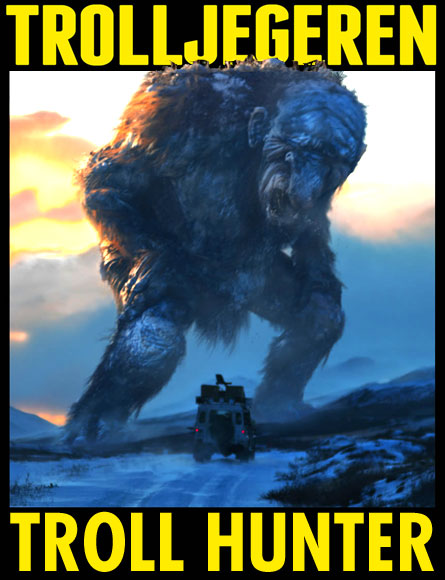
Trollhunter. Find him. Watch him. Learn from him.
by Mayumi-H | May 7, 2012 | Excerpts, Fearless, Process
I know I’ve said a million times that you shouldn’t go back and re-write until you’re finished…but, rules are made to be broken.
The “original” draft of Chapter 11 moved things along at what I thought was too quick a pace. There was too much pluperfect recap in the first two pages or so that just felt rushed, to me; an “info dump,” of sorts. So, while this does not change anything that happens in the chapters following, and while it may very well end up hitting the floor when I do my first big edit (in which I’ll likely cut about 10-15% of text), I’ll at least have gotten the words down.
The sofa wasn’t very cosy – it was too short for him to stretch out properly, for one thing – but it was a hundred times better than the chairs in the CCU lounge or in Amber’s room, which were barely comfortable enough for sitting, let alone dozing. And it was hours closer than his own bed, to which he wasn’t quite ready to retreat, yet, with Amber still alone at hospital. Still, he managed to drift into a fitful sort-of sleep, waking just past six with a crick in his legs and a rotten-tasting dryness in his mouth.
Stumbling to the bathroom, he managed to find a bottle of mouthwash and freshened up a bit with that. He washed his face, too, pausing to take note of the dark circles under his reddened eyes, and the uneven two-day growth of beard on his face. He smelled of nervous sweat and musk, as well, but there was little to be done about that, beyond a cursory wash of pits and appendages at the sink.
As shit as he looked, though, and as shit as he felt, he knew that it wasn’t anything compared to what was waiting for Amber. And it was for that reason more than any other that he frowned at his own ridiculous vanity, swiped the spare keys from the kitchen counter, and jogged back to hospital as quickly as he could do, ignoring the fresh rain that pattered down around him.

There are few things worse than waiting in one of these damned chairs.
(photo courtesy visualphotos.com)
Maybe I originally glossed over a lot of the hospital scenes because writing them has been so difficult for me. It means going to a place inside of my memories that I don’t like to visit. Except that the pain and uncertainty in those moments of just waiting, not knowing, can’t be approximated any other way. Not by me, at least.
I don’t enjoy hurting these characters, who are such a part of myself. But through pain, we grow. And Ross needs to grow, if he’s going to be fearless.
Have you ever relived a painful part of your past, to get more in touch with the heart of your story?
by Mayumi-H | May 5, 2012 | Fearless, Process
“Sell-out!”
My husband makes this casual accusation all of the time, mostly of visual or musical artists. His perspective is that an artist is true to their work or vision only if they’re suffering in obscurity and relative poverty. I argue back at him that, sure, an artist has a vision and should stay true to that. But how many people really get into music or writing or art and don’t want to be successful and make money at it? Green Day, for example, lost a lot of their punk “cred” (at least with my husband and his friends) when they signed to a big record label and became international superstars.
My answer to that? “…What?”

“No, guys, I don’t want to make a bajillion dollars playing stadium shows. Let’s just go back to playing in our garage.”
This brings me to my point (such as it is): What’s the right balance of creating art for yourself, and creating it for other people?
Theresa Stevens over at Edittorrent has a great post about Complexity in stories. In it, there’s a terrific bit about writers who spell things out for the reader, and weaving a bit of mystery and complexity into the words.
When I’ve written fiction stories before, I try to write on two levels: on a very basic level, a reader can just read the words and get a hopefully fulfilling story. On another level, though, I try to introduce deeper meaning for the moment or characters. It’s not super-obvious, but if you’re willing to think about what’s happening on the page, there’s another layer to the story.
This invariably takes more concentration and skill, though. And I occasionally think that maybe I’m just creating more work for myself. After all, I’m an unproven writer, and most readers likely won’t take a chance on whatever I produce, without a name to myself.
But I don’t want to write for a genre or audience – or in a style – simply because it’s popular or the latest new thing. It’s impossible for me not to emulate the stories I’ve loved since I was a little girl, but I don’t want to study a Twilight or Hunger Games to change the way I write, to make my novel more mainstream and publishable. I want to tell my story, in my voice, with all of the sexy, fluffy, ugly stuff that goes along with it.
So, I ask you. Which is more realistic for the starving starting novelist? To be the artist, or the hack?

Ben Skinner – one of the inspirations for Ross – strutting his stuff on the water.
photo courtesy and copyright Geoff Tydeman
by Mayumi-H | Apr 28, 2012 | Fearless, From Hell (A Love Story), Process
One of the things that Mr. Guy talks about over at The Red Pen of Doom is keeping your pitch simple. Four words or less, he suggests, to give a basic summary of your novel. From there, you can elaborate to a sentence and then a paragraph, but those four words need to sum up the gist of your story.
Brought to you by the number 4.
Four words? Even my comics creator friend, Pete Stathis, suggested the seven-word synopsis. I had issues coming up with seven words to sum up my story, but, compared to four, seven would be cake.
Anyway, since reading that article about the simple pitch, I’ve been trying on and off for the last several weeks to come up with something suitable. Everything sounds so trite, though. I’m trying to stay universal, since one of the other suggestions made over at the Red Pen of Doom is that the hero doesn’t matter (not to the pitch, anyway): it’s the conflict that’s really important.
That piece of advice should probably make my task easier…except that it doesn’t.
I asked my mother for advice about this (so you know that I’m desperate). She asked what a pitch was, to start, and then said, “So, if I were to write my life story, my pitch would be something like, Memoirs of a Gaido-san, yes?” (Gaido-san is Engrish for “Miss/Madame Tour Guide.”)
Damn it if my mother isn’t better at this than I am.

Your typical "gaido-san"
For anyone who’s taken a peek at Fearless, it’s about this carefree and callous surfer-type who falls in love with the bold new girl in the village, blah blah blah, and I’ve likely lost you already. The main focus of the story is really about their relationship, coming to terms with their past and present mistakes and misconceptions, and how a single accident can change the way that they approach their lives. There are no invaders from space, no marauding pirates. So, how do I compress that story of love and relationships into four words and still make it interesting?
Whenever I consider my four-word pitch, I’m dogged by cliched, general phrases that ultimately say nothing about the story. If I read these on a poster with a graphic, maybe something would click, but probably not. To give you an idea, I’m stuck with such trite fare as: “Healing isn’t just physical,” and “One accident changes everything.” Or the oh-so basic, “What’s love without fear?” (Because the story deals a lot with these people’s fears: fear of trust, fear of loss, fear of letting go of the people whom you love.)
But none of these have really grabbed me. And if they don’t grab me, they don’t have a chance in Hell of grabbing you.

Painting by Dolk.
If only I could use this as my pitch.
http://www.thegiant.org/wiki/index.php/Dolk
So, it’s back to the drawing board, for me and this project. I’m coming in to the home stretch on my first draft (denouement left, now), and then it’s off for some light (followed by heavy) editing. In the meantime while I finish up the big text, though, I guess I have plenty of work to do on the little text.
(Wait, wait! How about “Love, by accident“? Nah. Didn’t think so.)



Recent Comments